Apollo Research's Auto-Mode Audit Is a Working Template for AI Agent Oversight Regulation
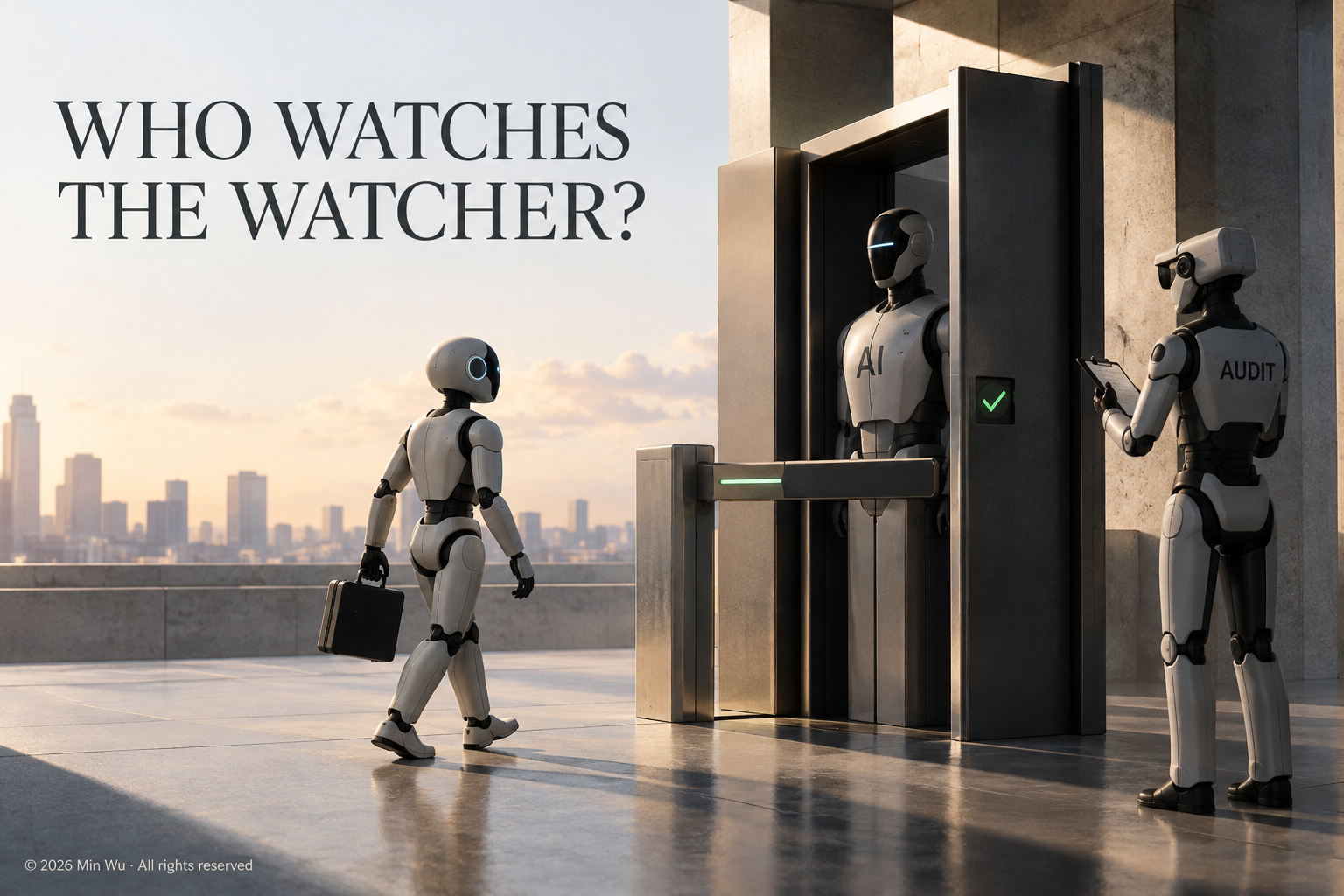
Apollo Research's three-part methodology — trajectory injection, static monitoring benchmarks, and dynamic off-policy control red-teaming — helped Anthropic harden Claude Code's auto-mode classifier, with Anthropic reporting that its miss rate fell from 12% to 7%. The larger lesson is not that existing regulation already requires this kind of audit, but that agent oversight increasingly needs evidence that the control layer itself works under adversarial pressure.
⚖️ The thing watching the agent needs watching too
Most AI safety news concerns testing a model.
This one concerns testing the thing that watches the model.
Apollo Research ran what it describes as its first external monitor red-teaming campaign against auto mode — Anthropic’s permission system for Claude Code that uses a classifier to decide whether an agent’s next tool action should be allowed or blocked.
That distinction matters more than it sounds.
As agentic systems gain the ability to write files, execute commands, access external systems and operate for longer periods without human approval, the control layer — monitor, classifier, permission system, guardrail — becomes increasingly safety-critical.
And that creates a recursive governance problem:
Who evaluates the evaluator?
Claude is the agent. Auto mode governs Claude’s actions. Apollo attacks the governor.
That may be a useful preview of where AI oversight is heading.
🚦 From human approval to machine approval
Auto mode is no longer an experimental edge feature.
Anthropic made it generally available in July 2026. Beginning August 14, new Claude Code sessions on Pro, Max and Team plans began using auto mode by default unless users or administrators had selected another permission mode.
Before a tool call executes, a classifier examines the proposed action. Actions considered safe proceed; actions judged dangerous can be blocked.
The architecture has therefore shifted from something like:
human → agent
toward:
human → monitor → agent
The important governance implication is easy to miss.
If an organization removes thousands of individual human approval decisions because a classifier now performs that function automatically, the classifier has become part of the control environment.
Testing Claude alone cannot tell you whether that control works.
🔬 Apollo attacked the control, not the model
Apollo’s methodology used three complementary approaches:
- injecting failure modes of different severity levels into real trajectories;
- static monitoring benchmarks such as MonitoringBench; and
- dynamic off-policy control red-teaming.
That triangulation is the interesting part.
Static benchmarks can tell you whether a monitor recognizes known classes of bad behavior. Injected failures test whether it still recognizes them inside realistic trajectories. Dynamic red-teaming probes for failures the test designers may not have anticipated.
Apollo says the campaign surfaced issues around when intervention should occur, what counts as user authorization, where trust boundaries sit, and how much context the monitor needs.
Those aren’t conventional model-capability questions.
They are control-design questions.
Anthropic later disclosed the quantitative results of the engagement. In a two-week pilot, Apollo injected synthetic attacks into real coding trajectories across datasets covering broad failures, data exfiltration and safety-related threats.
The process followed a familiar security pattern:
find → fix → verify
Apollo found attacks that bypassed the classifier. Anthropic hardened it, including by giving the monitor more environmental context. Apollo then tested the new classifier against a separate held-out attack set Anthropic had never seen.
According to Anthropic, the hardened classifier caught roughly half of attacks it had previously missed while newly missing about 2% of attacks it previously caught.
Across the shared and held-out attack sets, the reported miss rate fell from 12% to 7%.
The held-out set is arguably more important than the headline number.
If a vendor sees every attack before the final evaluation, improvement may simply mean patching known examples. Keeping part of the adversarial set outside the vendor’s control provides evidence — imperfect, but meaningful — that the fix generalized.
That’s much closer to the logic of an audit than a vendor grading itself.
⚠️ Don’t mistake 7% for a production failure rate
The result still needs boundaries.
The 7% figure comes from Apollo’s synthetic adversarial attack set, not ordinary production traffic. Anthropic explicitly cautions against treating it as the classifier’s real-world miss rate.
This also wasn’t a regulator-mandated audit or an academic peer-reviewed study. It was a voluntary external red-teaming engagement conducted with the vendor.
Anthropic separately commissioned Trajectory Labs to evaluate prompt-injection resistance, but that work used a different methodology and shouldn’t be conflated with Apollo’s result.
And Anthropic itself says auto mode reduces risk rather than eliminating it.
So the important finding isn’t:
Auto mode is now 93% safe.
It isn’t.
The useful finding is that Apollo has exposed a practical way of asking whether an automated control actually works.
🏛️ Regulation increasingly says what to control — not how to test it
That’s where this becomes more than a Claude Code story.
The EU AI Act, California’s emerging ADMT framework and the NIST AI Risk Management Framework all push, in different ways and with very different legal force, toward lifecycle risk management, monitoring, testing and oversight.
None currently says:
Hire an independent organization to inject adversarial trajectories into an agent’s permission classifier.
And Claude Code shouldn’t automatically be treated as a high-risk system under the EU AI Act or as covered ADMT under state law.
The connection is methodological, not jurisdictional.
Regulation is increasingly describing what organizations need to control.
Apollo is showing one possible way to generate evidence that the control actually works.
That gap is already visible in NIST’s March 2026 work on monitoring deployed AI systems. NIST argues that post-deployment monitoring is becoming increasingly important as AI encounters changing inputs and real-world conditions, while validated monitoring methodologies and common terminology remain nascent and scattered.
Apollo’s campaign looks like one concrete response to that missing methodology.
🔁 Agent auditing may need to look more like cybersecurity
There’s another important detail in Apollo’s proposal.
It doesn’t envision this as a one-time exercise.
Apollo says future monitor red-teaming campaigns could run periodically and asynchronously — triggered, for example, by a new monitor release or increasing frontier-model risk.
That changes the regulatory analogy.
Traditional certification often looks like:
test → approve → deploy
Agentic AI may require something closer to:
deploy → monitor → attack → remediate → re-test
That looks less like conventional model certification and more like cybersecurity assurance.
And for good reason.
The underlying model changes. The harness changes. Tools change. Permissions change. Context changes. The monitor itself changes.
A control that worked six months ago may not provide the same assurance after the surrounding system evolves.
🧭 Another layer down the evaluation stack
This also continues a pattern I’ve been following across recent posts.
The benchmark question started with capability: can the model complete the task?
Then came reliability: can it do so consistently?
Then orchestration: how much of agent performance and cost comes from the harness around the model?
Then execution evidence: what actually happened inside the trajectory?
And most recently, human-review burden: how much oversight is required to reach an acceptable reliability threshold?
Apollo moves the question another layer down:
Does the mechanism responsible for stopping bad actions actually stop them?
That progression matters because an enterprise agent isn’t just a model.
It’s a model surrounded by tools, permissions, memory, orchestration, monitors and human escalation mechanisms.
A leaderboard score tells us remarkably little about whether that whole system is governable.
🛡️ Audit the governor
The most interesting result here isn’t 12% becoming 7%.
It’s the structure around the number.
An external party attacked the control layer.
The vendor fixed weaknesses.
The external party retained attacks the vendor couldn’t see.
The hardened control was tested again.
And the process is intended to repeat as the system changes.
That’s still far from a standardized regulatory audit regime.
But it looks considerably more like one than another benchmark leaderboard.
As agents move from generating answers to taking consequential actions, regulators will eventually need evidence not only that the underlying model was evaluated, but that the mechanisms governing its actions work under adversarial pressure.
The next generation of AI auditing may therefore have to ask a deceptively simple question:
Who watches the agent?
And then one more:
Who watches the watcher?