From London to Liverpool: Golf, History, and the Roads Between
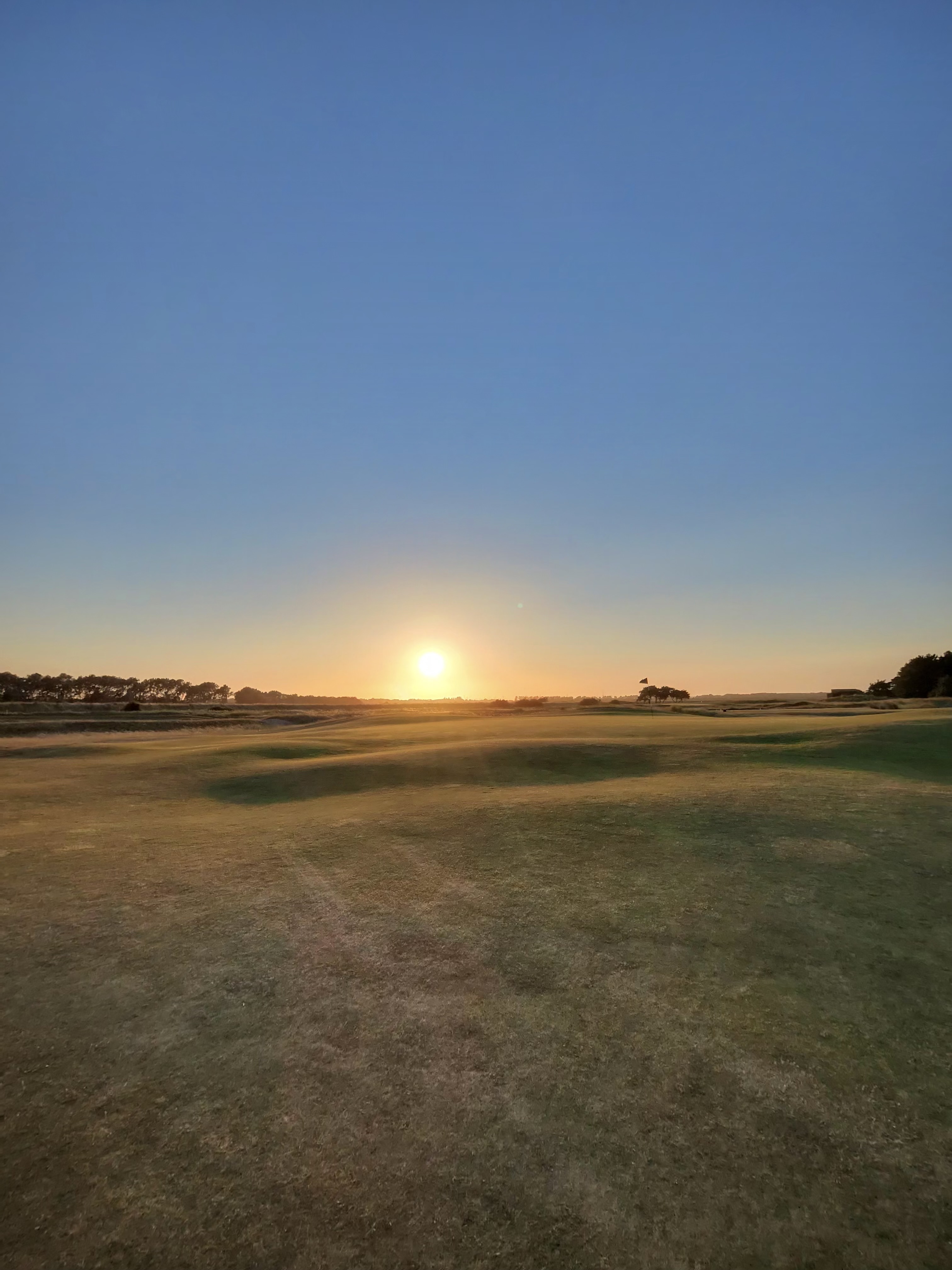
The best road trips are not defined only by the destination, but by the moments that gradually change the meaning of the journey.
I came to the UK primarily for golf and The Open, but the first few days of the trip have already become something broader: a journey through several different versions of Britain.
There has been modern London and maritime London, championship golf and traditional links golf, Shakespeare’s England and the birthplace of the Industrial Revolution. Between them were long drives, late dinners, unexpected conversations, and the kind of small decisions that gradually turn an itinerary into a personal story.
🇬🇧 Beginning in London
My arrival at Heathrow was not especially glamorous.
The rental-car process was far more inconvenient than expected. Instead of collecting the car directly at the terminal, I had to take a train to Hatton Cross and then wait for another shuttle to the rental location. After an overnight flight, it was not the smoothest introduction to the UK.
But the day improved quickly.
I drove to Richmond, walked around Richmond Green, and had lunch near the Thames. It was a calm first look at London—less monumental than Westminster or Buckingham Palace, but more human. The river, the narrow streets, and the relaxed pace offered a gentle transition into the trip.
Later that evening, after checking into my hotel in Surbiton and taking a long nap, I drove across London to Greenwich.
Greenwich turned out to be one of the best early choices of the trip.
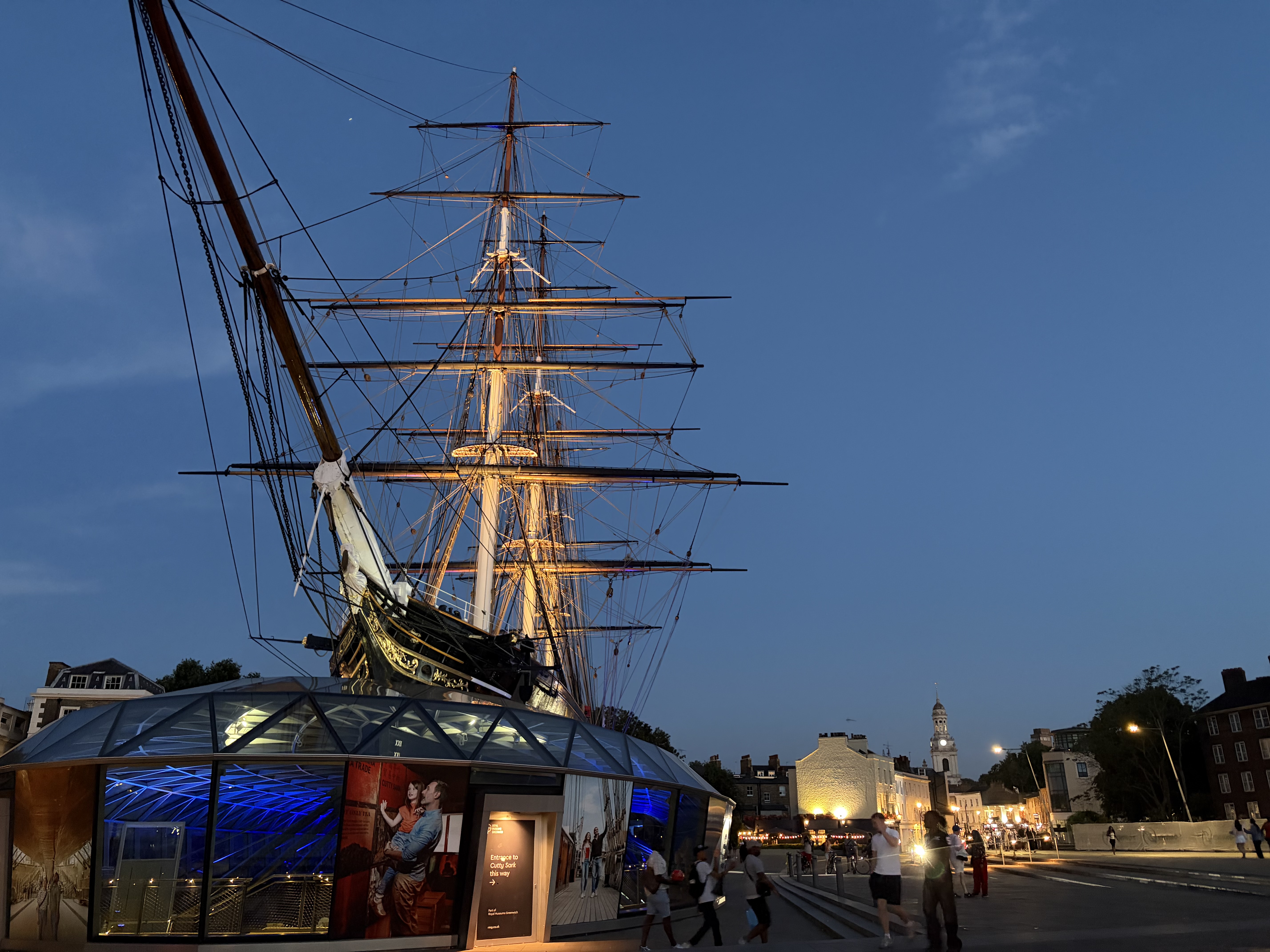
Standing beside the Thames, with the Old Royal Naval College behind me and Canary Wharf glowing across the river, I could see two Londons at once: the historic maritime city and the modern global financial center.
That contrast stayed with me.
London is not one story. It is a city built from layers of power, trade, empire, finance, culture, and reinvention.
⛳ The Grove: A Modern Championship Experience
The next afternoon, I played The Grove.
The Grove is not a traditional British members’ club. It is a modern championship resort course—polished, accessible, and designed to deliver a premium experience without the formality associated with many historic clubs.
The course was in excellent condition, and the late-afternoon tee time gave me long shadows and warm evening light across the fairways.
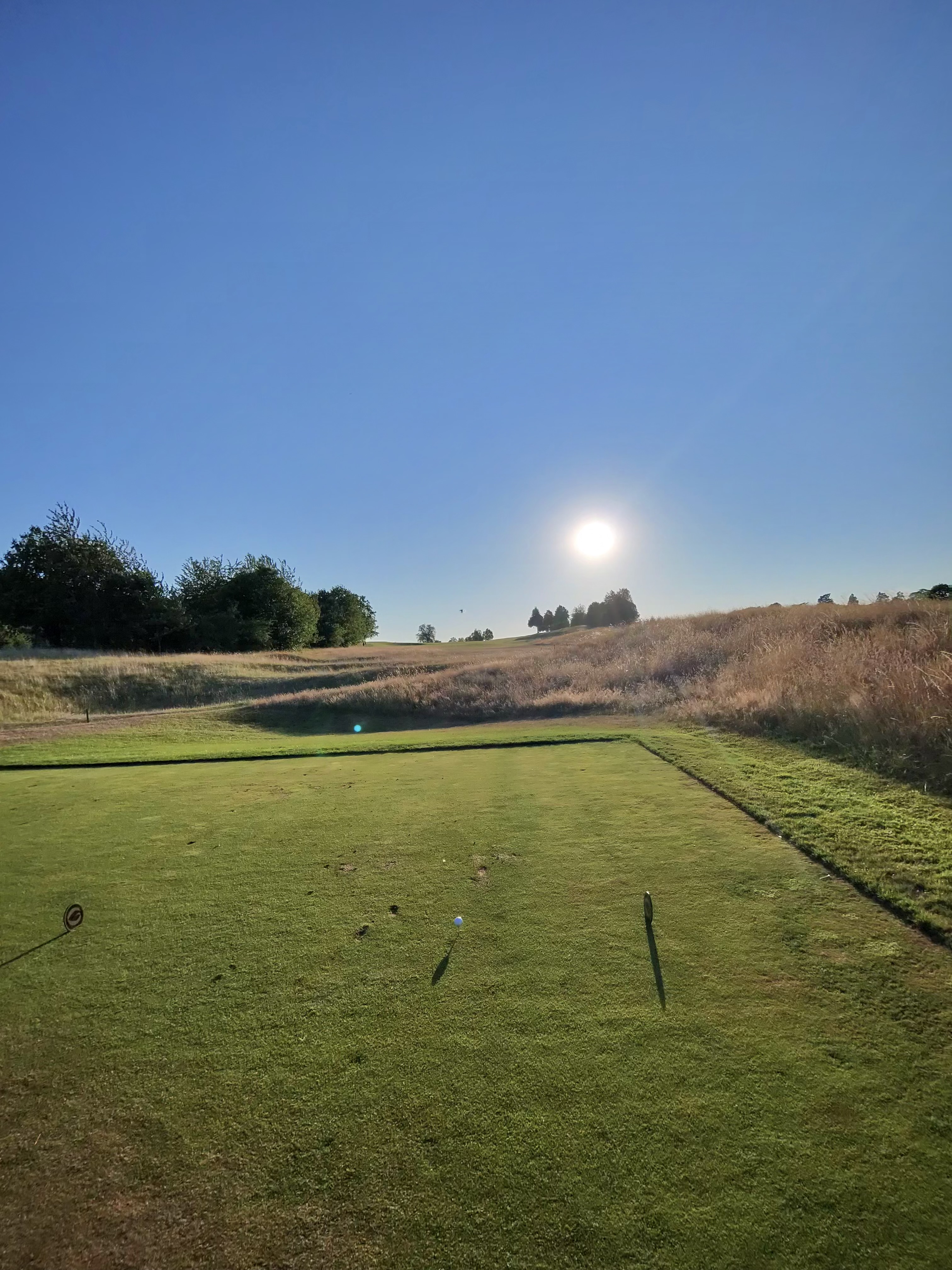
I was paired with another golfer, and what began as a shared round became a long and thoughtful conversation that continued over dinner in the clubhouse.
That is one of the things I appreciate most about golf. Four or five hours on a course creates a type of space that is difficult to reproduce elsewhere. Conversation develops slowly. There is no need to force it. Between shots, walks, and pauses, people often share more than they would in a conventional social setting.
The round reminded me that travel memories are often shaped as much by the people encountered along the way as by the places themselves.
After dinner, I drove into Soho.
The timing turned out to be perfect. England had just defeated Norway in the World Cup’s quarter-final, and central London was still celebrating. Pubs were overflowing, supporters filled the streets waving England flags, and the atmosphere was energetic without feeling chaotic. As a visitor, it was one of those moments that cannot be planned—you simply happen to arrive at the right place on the right night.
At midnight, Soho was still alive. The streets around Chinatown, Old Compton Street, and Piccadilly felt almost theatrical—crowds spilling from pubs, music drifting through open doors, and late-night restaurants still full.
Greenwich had shown me London’s history. Soho showed me its celebration.
🌊 Prince’s: Discovering Links Golf Properly
On Sunday, I drove to the Kent coast to play Prince’s Golf Club.
Prince’s is a very different experience from The Grove. It is exposed, firm, strategic, and shaped by the wind. Instead of manicured parkland framed by trees, the course stretches through dunes, rough, sand, and open sky.
I had originally booked 18 holes, but the day was too good to stop. I ended up playing all 27 holes.
By the final nine, the sun was lowering across the course, and the landscape took on the muted gold and brown tones that make links golf so distinctive. The fairways looked almost dry and ancient, shaped more by weather than by landscaping.
The bunkers were especially memorable. They were not merely hazards placed beside greens. They were deep, sculptural features that visually defined the course and demanded respect.
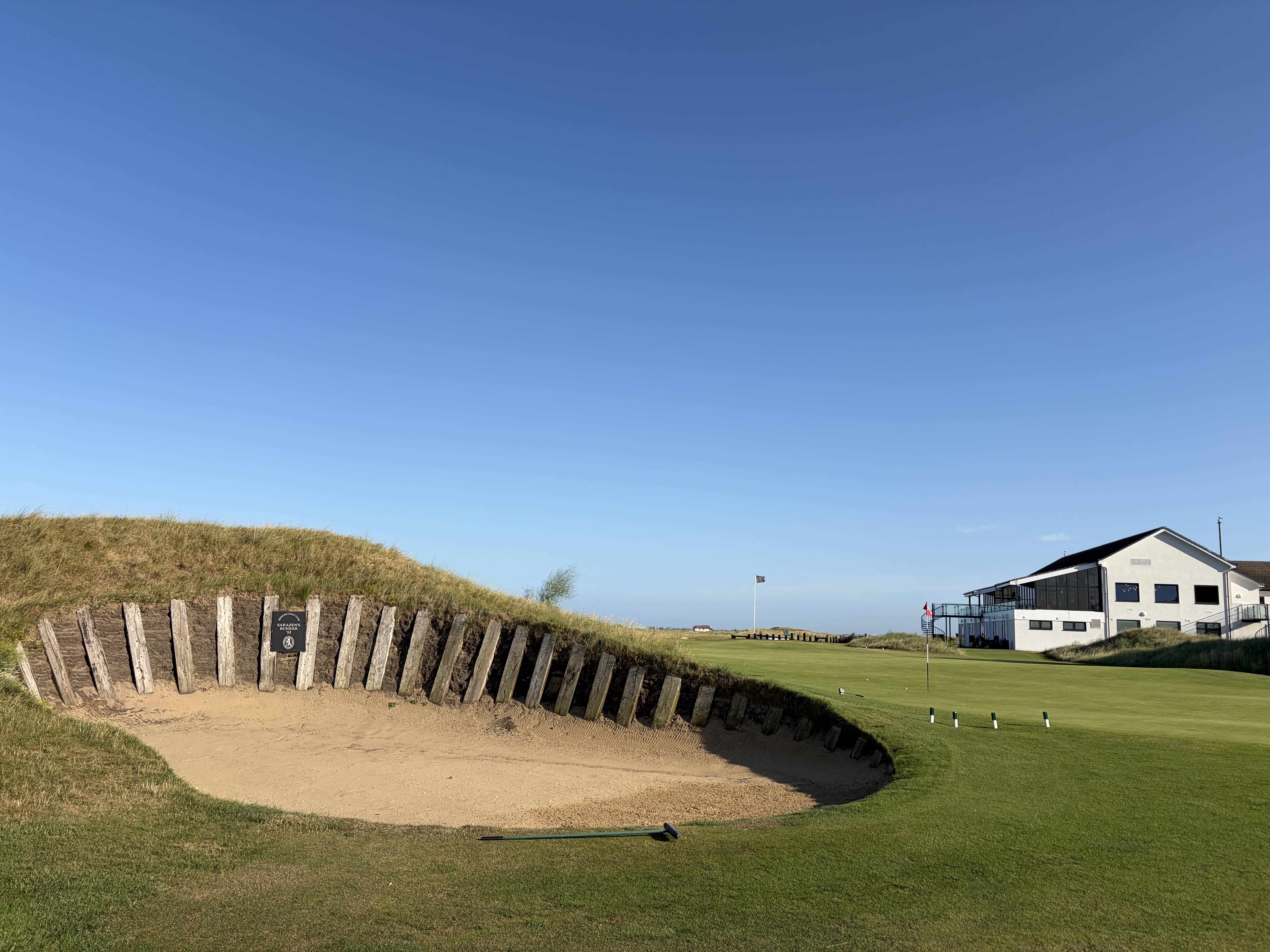
Playing 27 holes was physically demanding, but it also gave me time to understand the course more fully. Links golf is not simply golf beside the sea. It requires a different imagination.
The ground matters.
The wind matters.
The shape of the shot matters.
A ball can travel farther along the ground than through the air, and a seemingly safe line can leave a far more difficult next shot.
By the time I finished, most nearby restaurants were already closed. That led to another late drive into London in search of food—one of the less elegant realities of travel planning.
Still, the golf was worth it.
🚗 Northbound: Stratford and Ironbridge
On Monday, I checked out of my hotel and began the drive north toward Liverpool.
Rather than treating the journey as a simple motorway transfer, I stopped first in Stratford-upon-Avon.
Stratford is inseparable from Shakespeare, but even without entering every museum or historic house, the town has a strong sense of place. The River Avon, the old buildings, the theatre, and the narrow streets all reinforce the idea that this is not merely a preserved tourist town. It remains connected to the cultural identity of England.
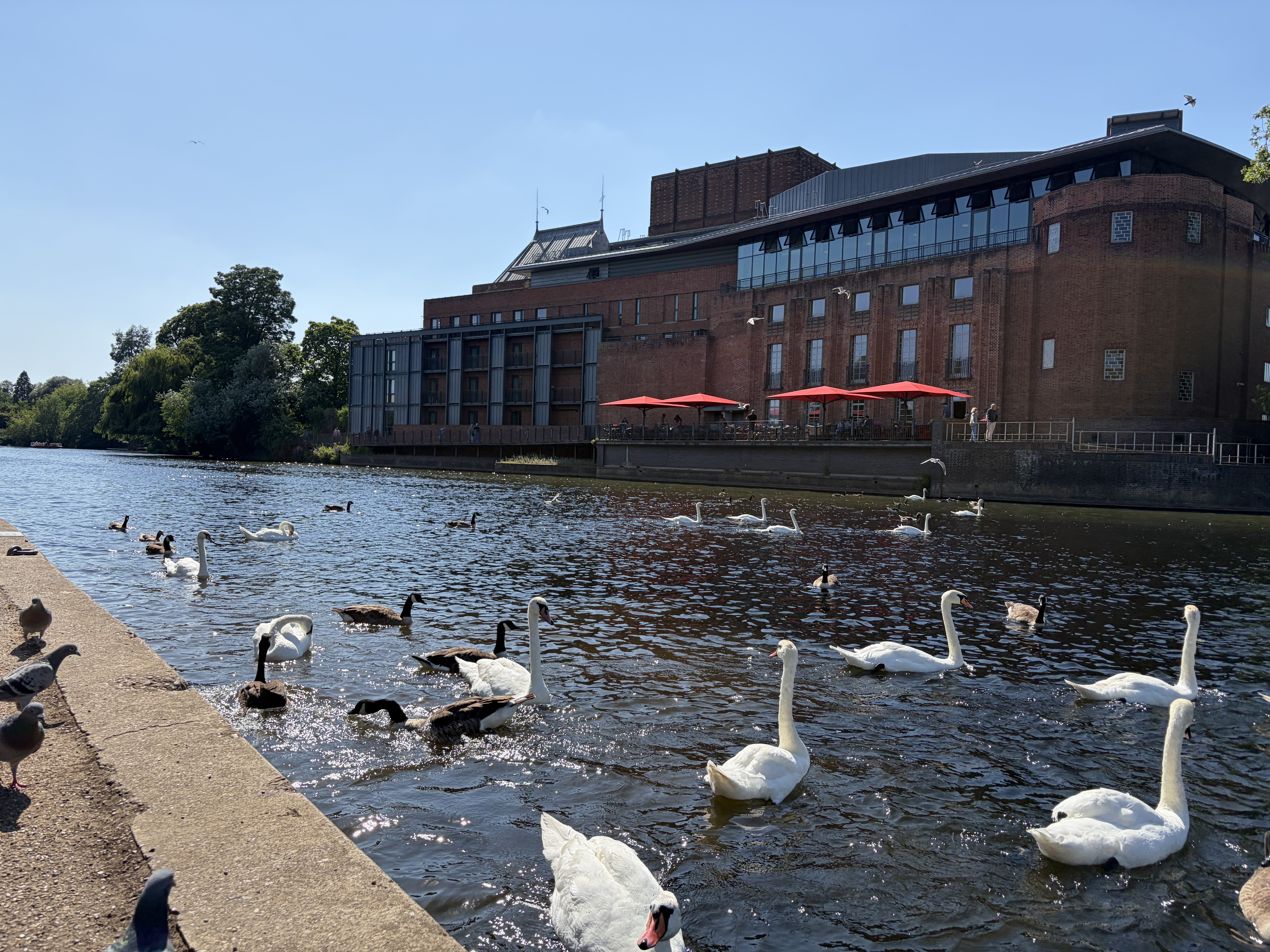
I stayed for about an hour before continuing north.
The next stop was Ironbridge.
If Stratford represents literary England, Ironbridge represents industrial England.
The Iron Bridge, completed in the eighteenth century, is often treated as a symbol of the Industrial Revolution. Standing above the River Severn, surrounded by greenery and old houses, it does not immediately look like the birthplace of a technological transformation.
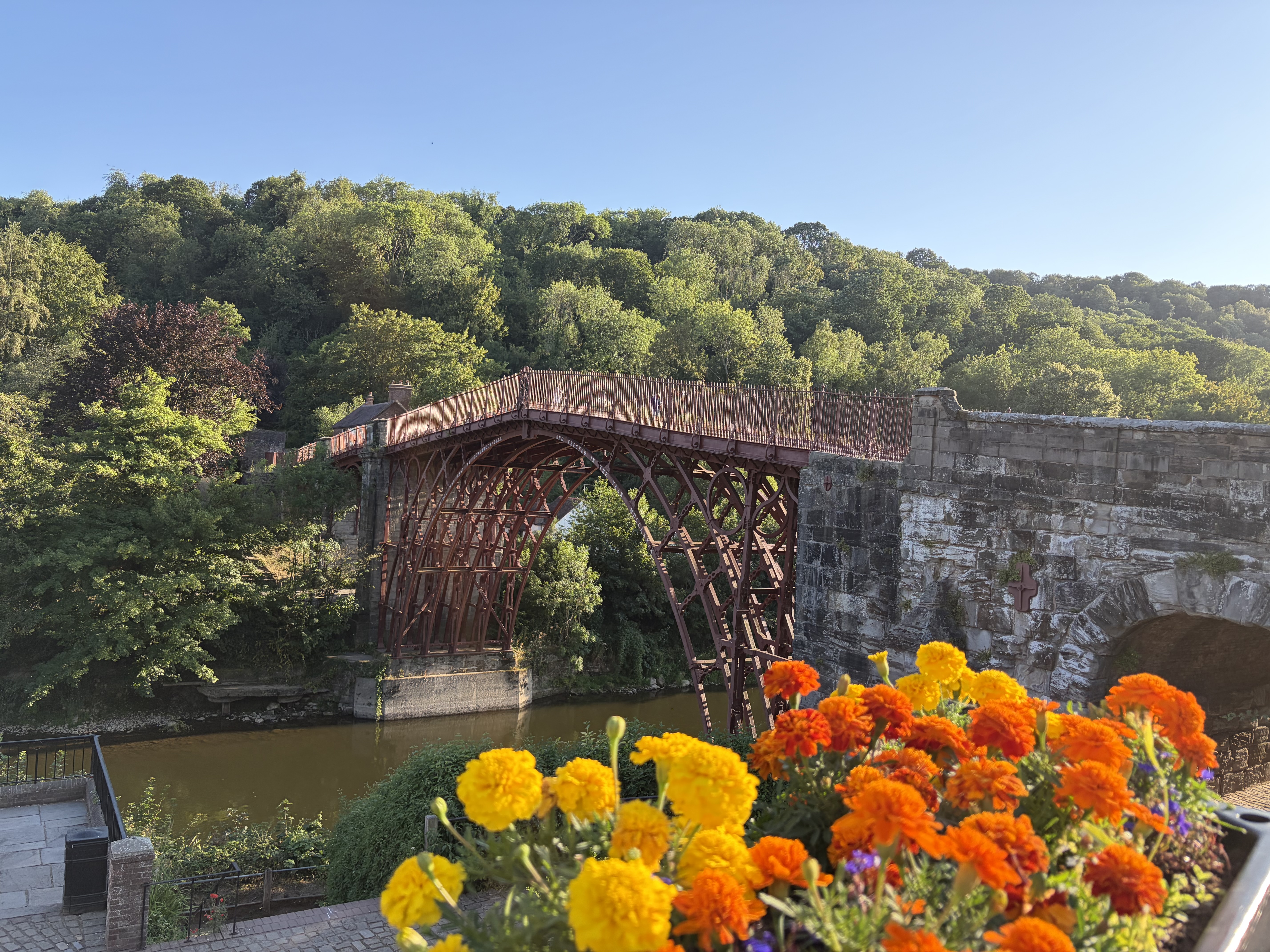
That contrast is what makes the place compelling.
The landscape is peaceful, but the bridge represents a moment when new materials, engineering methods, and industrial ambition began changing the world.
I had food and drinks near the bridge and spent some time walking beside the river before continuing to Liverpool.
By then, the trip had already connected several different historical narratives:
- London’s maritime and imperial past
- Shakespeare’s cultural legacy
- The Industrial Revolution
- The evolution of British golf
None of these were planned as a single theme, but together they began to form one.
🛣️ The Journey So Far
The first four days of the trip have made me think about the difference between visiting places and experiencing them.
A checklist itinerary asks:
- What did I see?
- Which landmark did I visit?
- Which course did I play?
A meaningful journey asks different questions:
- What did the place make me think about?
- What did I learn from the people I met?
- Which moments changed the direction of the day?
- What will remain when the details of the schedule are forgotten?
So far, the strongest memories are not necessarily the most famous attractions.
They are:
- Seeing old Greenwich and modern Canary Wharf across the same river
- Playing golf into the evening light at The Grove
- Walking 27 holes along the Kent coast
- Crossing the Iron Bridge and thinking about the beginning of the industrial age
- Driving through England and watching the character of the country gradually change
I have now arrived in Liverpool.
The next stage of the trip will include Formby Golf Club, The Open practice day, Nefyn Golf Club in Wales, and The Open Championship at Royal Birkdale.
The trip began as a golf journey.
It is becoming a story about Britain.