New York City Got Its Checkbook Back in 1986. The Watchdog Never Left.

Financial emergencies can create oversight institutions that outlive the powers that justified them. New York recovered control of its budget in 1986, but the supervisory architecture established during the 1975 crisis remains part of its financial governance five decades later.
In the spring of 1975, the banks stopped lending to New York City.
For years, America’s largest city had financed recurring budget shortfalls by borrowing against revenues it expected to collect later. Each year, new borrowing helped cover obligations left from the previous one. The arrangement worked as long as investors believed the next round of notes would be repaid.
By spring 1975, that confidence had evaporated. Municipal credit markets effectively closed to the city, and New York could no longer reliably borrow the money it needed to operate.
The consequences went beyond a financing problem. When lenders stopped trusting New York City’s financial management, the city began losing control over its own budget.
What followed was one of the most consequential experiments in emergency fiscal governance in American history. The immediate crisis eventually ended. The institution created to supervise it did not.
🏦 When the Banks Stopped Buying
New York’s fiscal collapse was not caused by a single bad budget.
For more than a decade, the city had accumulated structural deficits while relying heavily on short-term borrowing. Declining employment and tax revenues, rising expenditures, and inadequate financial accounting made the situation increasingly unsustainable.
Borrowing against anticipated revenues was supposed to address temporary cash-flow needs. Instead, it became a mechanism for financing recurring expenses.
By early 1975, investors were questioning whether the city could repay its obligations without issuing still more debt.
In April, New York State advanced approximately $800 million in emergency financing to help the city meet its obligations. But temporary assistance could not restore market confidence.
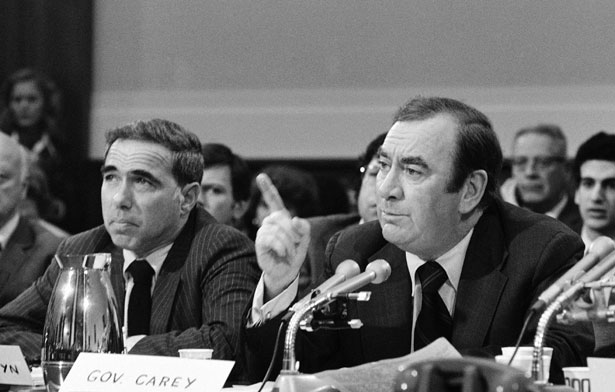
Governor Hugh Carey assembled an advisory panel to develop a more durable solution.
The result was a new financial institution that would fundamentally change the relationship between New York City, Albany, and its creditors.
💰 Big MAC: A Financial Rescue With Conditions
In June 1975, the state established the Municipal Assistance Corporation, quickly nicknamed Big MAC.
MAC was designed to restore access to financing by issuing bonds supported by dedicated revenue streams, including sales-tax revenues. Rather than relying exclusively on the city’s deteriorating creditworthiness, investors would receive additional statutory protections.
The corporation was chaired by investment banker Felix Rohatyn and governed by appointed directors rather than directly elected representatives.
MAC was a public corporation with a statutory mission, not simply an instrument of private bondholders. Nevertheless, its financing strategy depended heavily on convincing investors that New York would adopt credible fiscal discipline.
That created an important shift.
The city’s ability to finance public services increasingly depended on satisfying financial conditions negotiated outside ordinary municipal politics.
But MAC alone could not solve the problem.
Investors remained skeptical that New York’s political leadership could implement the necessary reforms. A financing vehicle was not enough; creditors wanted evidence that someone could enforce the financial plan.
Albany responded by creating a more powerful institution.
⚖️ The State Takes Control of the Checkbook
In September 1975, New York enacted the Financial Emergency Act, establishing the Emergency Financial Control Board.
Unlike MAC, which primarily addressed financing, the Control Board exercised direct oversight of the city’s financial management.
Its powers included reviewing and approving financial plans, overseeing borrowing, and imposing restrictions on certain financial commitments.
The board had seven members:
- The Governor of New York
- The Mayor of New York City
- The New York State Comptroller
- The New York City Comptroller
- Three public members appointed by the Governor
The structure was not entirely unelected. Four members held elected offices.
But the arrangement fundamentally changed municipal accountability. New York City’s elected officials no longer possessed exclusive authority over important financial decisions. State officials and gubernatorial appointees could exercise decisive influence.
As Donna Shalala and Carol Bellamy later discussed, the emergency arrangements raised fundamental questions about municipal home rule and democratic accountability.
The underlying trade-off was straightforward: the city needed external financing, and restoring investor confidence required constraints on its fiscal discretion.
New York did not formally surrender its municipal government. It surrendered a significant portion of its financial autonomy.
🏙️ The Social Cost of Restoring Confidence
The rescue was not merely an accounting exercise.
New York underwent a painful fiscal restructuring. Municipal employment declined sharply, public-sector wages were constrained, transit fares increased, and public services were reduced.
In 1976, the City University of New York introduced tuition for undergraduate students, ending its longstanding tuition-free tradition.
These measures emerged from negotiations and decisions involving city officials, state authorities, MAC, the Control Board, unions, and other stakeholders.
They were not all dictated by MAC alone.
But the broader direction was unmistakable: restoring financial credibility required expenditure reductions, new revenues, and enforceable fiscal constraints.
The consequences were distributed unevenly.
For bond investors, the restructuring offered greater confidence in repayment. For residents and public employees, it meant fewer services, reduced employment, and higher costs.
The crisis therefore raised a question that extends beyond municipal finance:
When an institution loses financial credibility, who gets to decide the terms of its recovery—and who bears the cost?
📅 The Emergency Ended. The Institution Remained.
The most revealing part of the story comes after the rescue.
New York eventually restored financial stability, improved its budgeting practices, and regained access to capital markets.
But the Control Board did not disappear.
| Year | What Happened |
|---|---|
| Spring 1975 | New York City loses access to municipal credit markets |
| April 1975 | New York State provides emergency financing |
| June 1975 | Municipal Assistance Corporation established |
| September 1975 | Emergency Financial Control Board created |
| 1975–1986 | Board exercises extraordinary financial approval powers |
| June 30, 1986 | Board determines that the control period can end |
| July 1, 1986 | City exits active financial control |
| 2008 | Authority to initiate a new control period expires, according to NYC Comptroller analysis |
| 2026 | Financial Control Board continues reviewing city financial plans |
| July 2035 | Current statutory termination date, subject to legal conditions |
The crucial turning point was June 30, 1986.
The board determined that New York had satisfied the statutory conditions for ending the control period. Beginning July 1, its principal emergency approval powers were suspended.
The city recovered substantial authority over its budget, borrowing, and financial operations.
Yet the board remained in existence.
Its continuing responsibilities included reviewing the city’s financial plans and assessing fiscal conditions.
This distinction matters. The board’s present authority is not equivalent to the sweeping powers it exercised during the original emergency.
Indeed, a New York City Comptroller analysis explains that the board’s statutory authority to initiate a new control period expired in 2008.
Renewed emergency control would therefore require a different legal basis, potentially including legislative action.
The emergency powers largely expired. The oversight institution survived.
🔎 Fifty Years Later, the Watchdog Is Still There
The Financial Control Board is not merely a historical footnote.
In August 2026, Mayor Zohran Mamdani attended the board’s annual meeting, more than half a century after its establishment.
The meeting was a reminder that the institution created during New York’s near-bankruptcy remains part of the city’s financial governance.
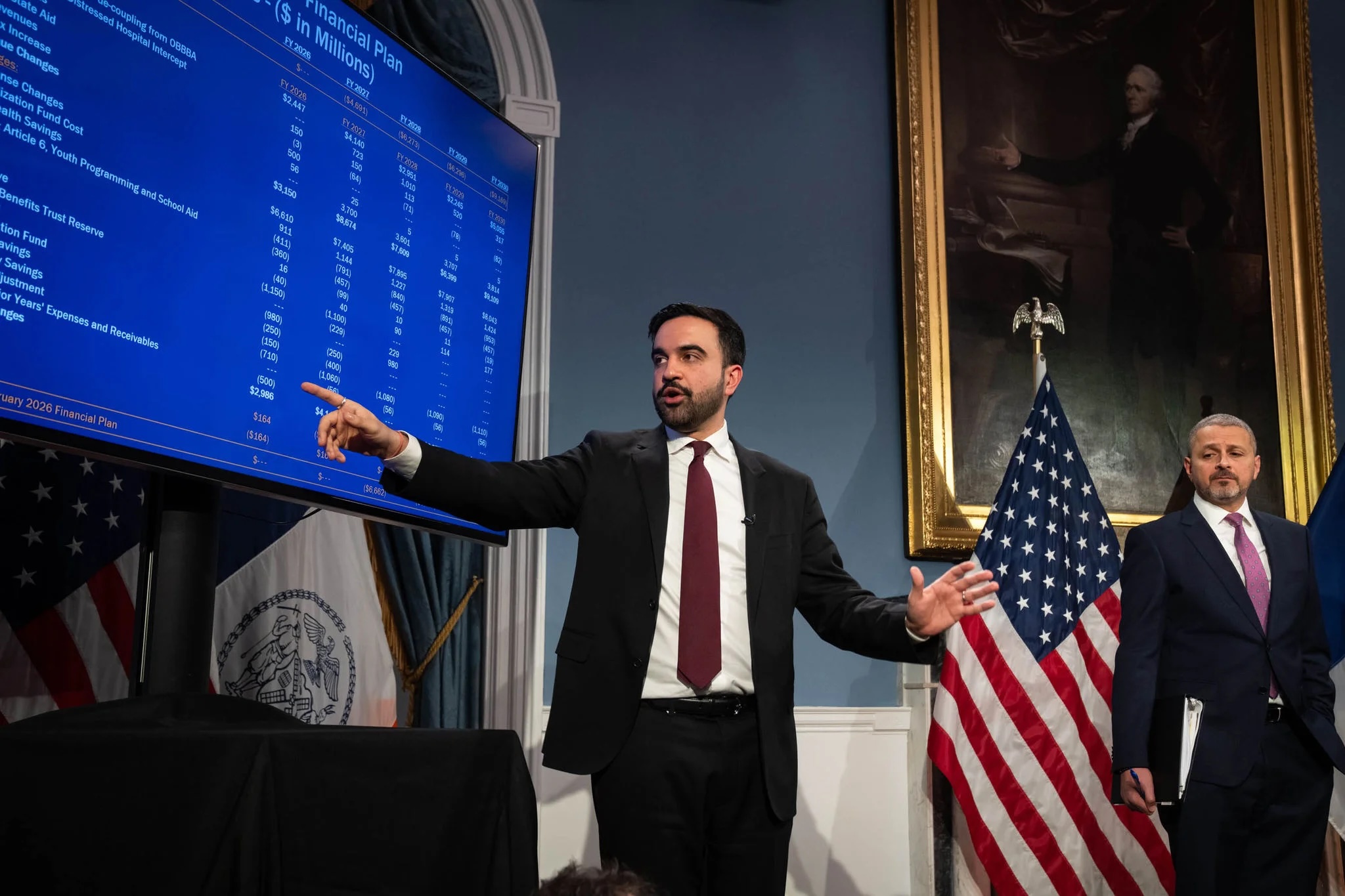
Its current role is primarily supervisory rather than interventionist. It reviews financial plans and provides an additional layer of fiscal scrutiny.
That continuing function may have value.
External oversight can encourage financial transparency, reinforce budget discipline, and provide an independent perspective on fiscal risks.
But it also illustrates how emergency institutions can become embedded in ordinary governance.
Once established, an oversight body develops statutory responsibilities, administrative routines, and institutional constituencies. Even when its original coercive powers disappear, the rationale for retaining some supervisory function may persist.
The question is no longer whether New York needs rescuing from the crisis of 1975.
It is whether the governance arrangements created during that emergency remain justified under today’s circumstances.
💡 The Lasting Lesson: Institutions Outlive Emergencies
New York’s experience is often remembered as a story of financial collapse followed by painful but ultimately successful recovery.
There is another lesson.
The city lost substantial fiscal autonomy in 1975 and recovered it in 1986. Yet the institution created to supervise the emergency remains operational in 2026.
This does not mean New York never regained control of its finances. It did.
Nor does it mean the Control Board retains the same powers it exercised during the crisis. It does not.
The more interesting observation is that recovering formal authority and dismantling an emergency oversight institution are two different processes.
The pattern has implications beyond New York.
Financial rescues, emergency management arrangements, and international stabilization programs often create monitoring requirements intended to restore confidence and prevent recurrence.
Some protections expire. Others become permanent features of governance.
Whether that persistence represents prudent institutional memory or unnecessary external constraint depends on the powers retained, their accountability, and their continuing justification.
New York’s experience demonstrates both sides of that trade-off.
The city got its checkbook back in 1986.
The watchdog never left.