Plan the Route. Let the Road Write the Story. — Part II
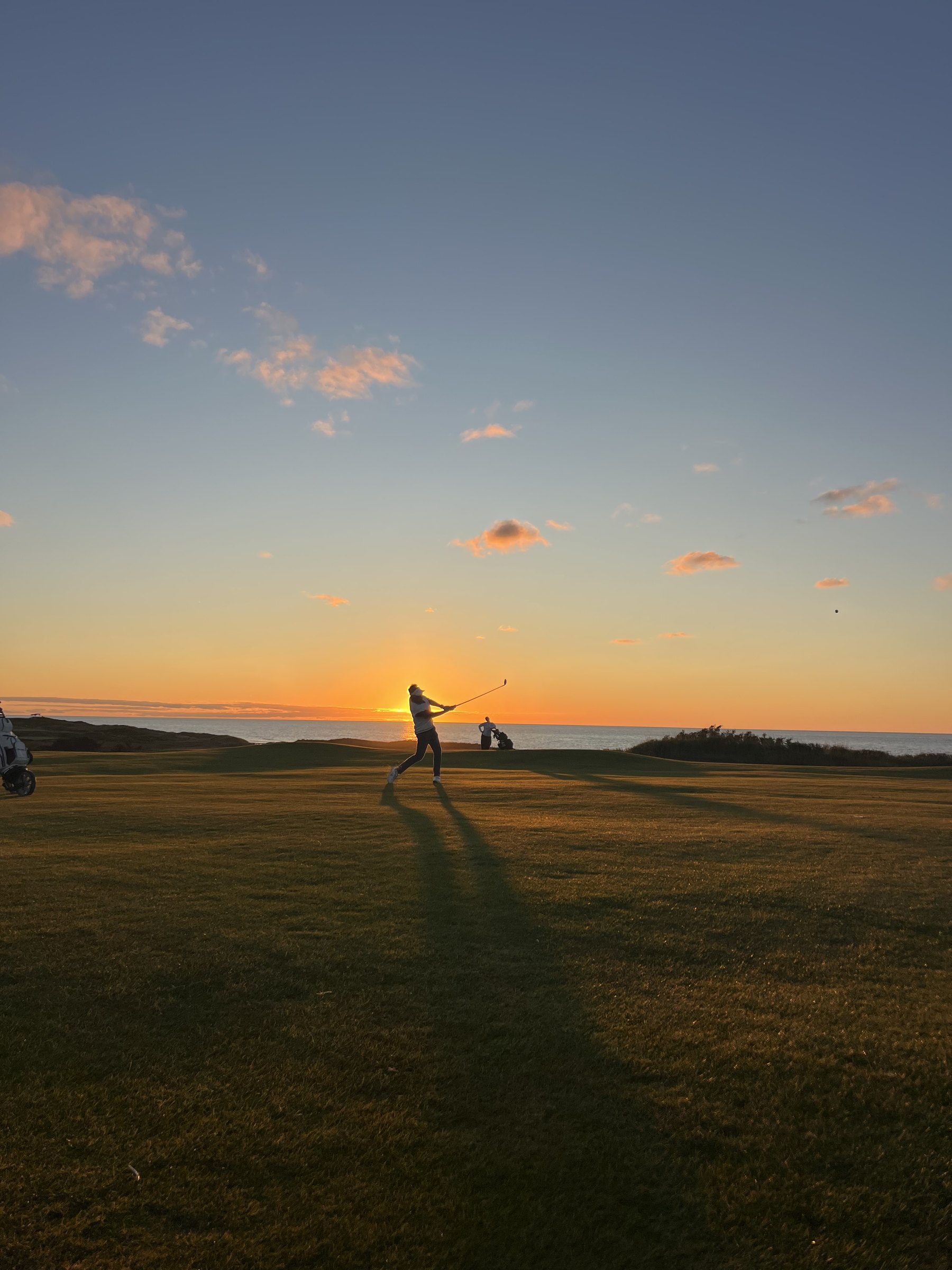
The places we remember are often inseparable from the people, accidents, and small decisions we could never have put on an itinerary.
Part I ended with me crossing the Canadian border late at night.
By then, I thought I understood the pattern of the trip: make a plan, leave enough room for improvisation, and accept that some of the best moments would happen somewhere between the two.
Canada was about to test that idea almost immediately.
🏨 The Hotel That Wasn’t There
My first night in New Brunswick was supposed to be simple. I had booked a small place in St. Stephen, just across the border, and because I knew I would arrive late, I had called ahead.
When I got there after midnight, nobody was there to check me in.
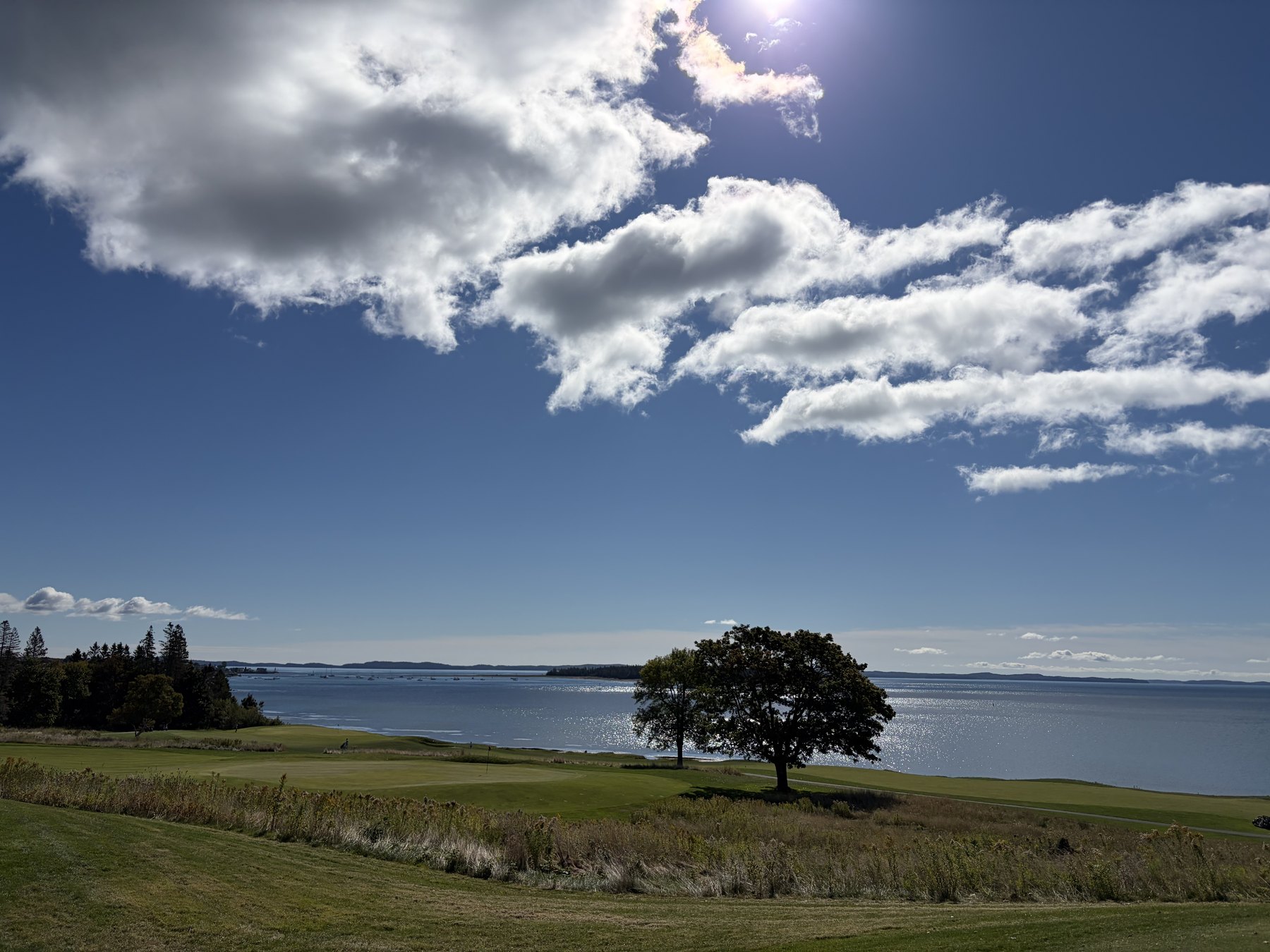
After a long day of driving from Newport, this was not the kind of spontaneity I was looking for. I started searching for somewhere—anywhere—to sleep, and ended up half an hour farther down the road at The Algonquin Resort in St. Andrews, a historic hotel overlooking Passamaquoddy Bay.
The next morning I discovered the resort also had a golf course, so before a noon meeting I went out for an early round.
A failed reservation had turned into a night at a historic resort and an unexpected morning of golf.
🏡 The Place I Almost Never Found
The next destination was supposed to be Pugwash, Nova Scotia.
That didn’t work either.
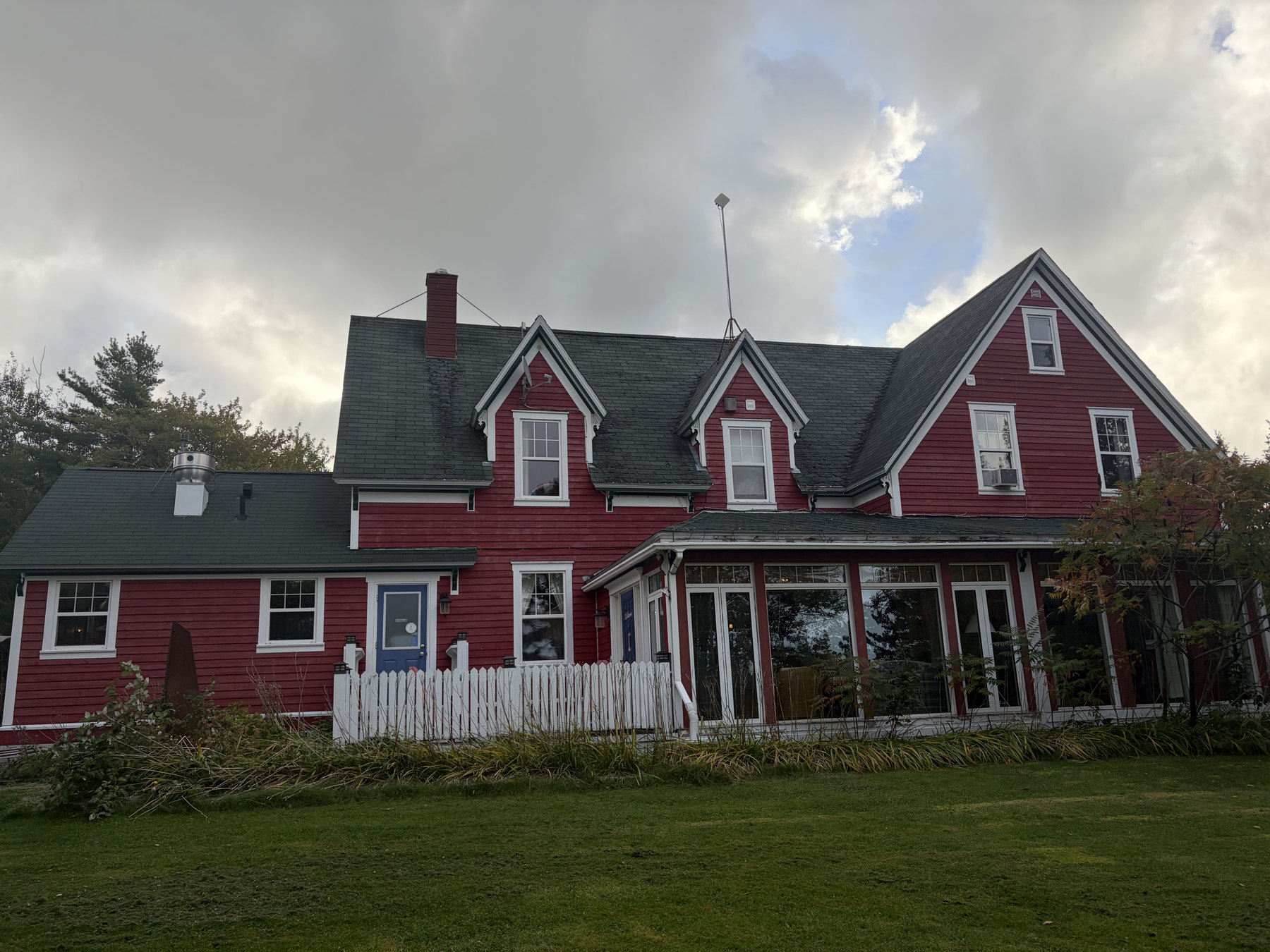
With the lodging I wanted unavailable, I found a small inn in a place I had never heard of: Little Shemogue, New Brunswick.
I arrived late again, to an envelope with my name and a room key left at the front desk. It was too dark to see where I was.
Then morning arrived.
The inn sat beside the water. The house was quiet and beautiful. Karen, who was looking after the property, prepared breakfast—coffee, juice, eggs and everything I needed before another workday.
Even more importantly at that point in a long road trip, I could finally do my laundry.
It sounds like a small thing.
But travel has a way of changing the value of ordinary comforts. A clean shirt, a hot breakfast, a conversation in the morning, or someone making an unfamiliar place feel welcoming can matter more than another attraction on an itinerary.
Little Shemogue had originally been a substitute.
By the time I left, it didn’t feel like one.
⛳ The Road Finally Reaches Cabot
From there, the road continued through the Maritimes and eventually onto Cape Breton Island.
Cabot had been one of the few fixed points around which the entire route had been built.
First came The Nest, an eleven-hole par-three course overlooking the landscape around Inverness.
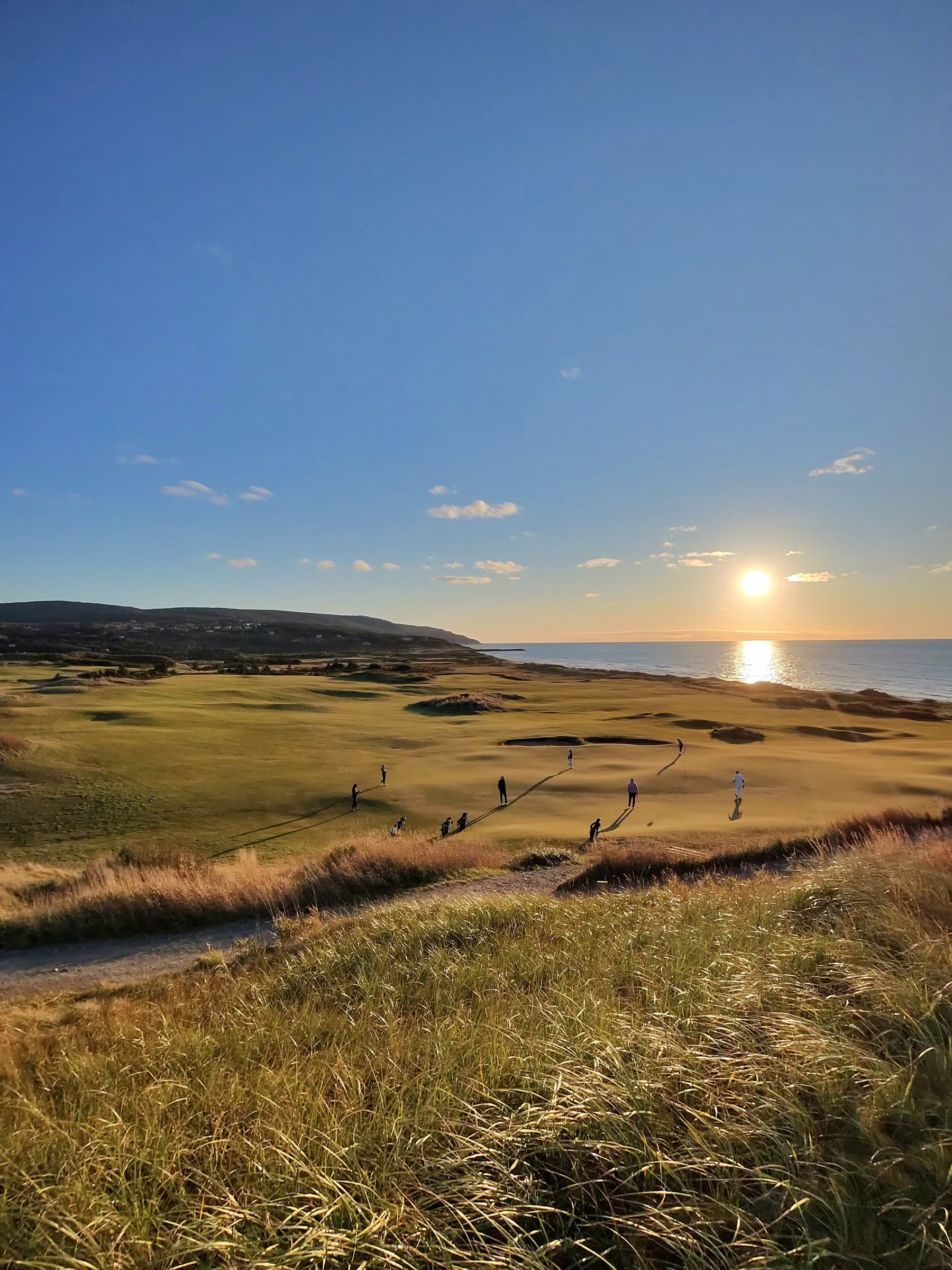
Then, late that afternoon, Cabot Links.
My tee time was 3:48 PM, late enough that finishing before darkness was never guaranteed.
For most of the round, I played with Maddie and Sarah.
Maddie worked at Cabot and knew the course extraordinarily well. She effectively became an unofficial caddie, explaining holes and helping me understand a course I had wanted to play for a long time.
Sarah was visiting, and together they turned what could easily have been a solitary twilight round into something completely different.
We played together until around the sixteenth. Then the light went quickly.
I kept going. By the final holes, finishing eighteen had less to do with the score than with completing the course before I could no longer see it. Somehow I did, walking off Cabot Links having played all eighteen.
What I remember most clearly isn’t a shot. It’s the company.
🌊 A Course Can Be a Destination. People Make It a Memory.
Golf courses are unusually good places for strangers to spend several hours together. You meet on the first tee knowing almost nothing about one another, then walk the same ground, solve the same small problems, celebrate good shots, laugh at bad ones, and gradually talk about things that have nothing to do with golf. Four hours later you know something real about people you hadn’t met that morning.
Then everyone leaves. There is something beautiful about how temporary that is.
I had driven thousands of miles to play places like Cabot. Once I arrived, the course was only part of what made the day. The people had become part of the geography too.
🦞 Returning Somewhere Changes It
Eventually every road trip reaches the moment when the direction changes. For days I had been driving north and east; now the compass turned south. There was no need to race home — I still had work during the week, and I wanted the return to stay part of the trip rather than become a long commute back to New Jersey.
That brought me back to St. Andrews.
The first time, I had arrived after midnight because another hotel had failed. I slept at the Algonquin, played golf, worked, ate lunch and left. Technically I had visited St. Andrews. I hadn’t experienced it.
So this time I stayed downtown, at the Kennedy House on Water Street.
That evening I had an excellent seafood dinner.
The next day, before leaving, I had seafood again for lunch.
But once again, the food and the town became secondary to something I hadn’t planned.
At dinner, I met Paul and Susie, two retired high-school history teachers who had moved to St. Andrews.
We started talking. History led to technology, technology to AI, and travel entered somewhere along the way. What could have been an ordinary solo dinner became a long conversation with two people I had never expected to meet.
Paul emailed afterwards. He sent essays he had written over the years and recommended Neil Postman’s Technopoly: The Surrender of Culture to Technology, on the complicated relationship between technology and culture.
I had gone back to St. Andrews because I felt I hadn’t properly seen the town. I left remembering two people.
🍂 Maine, Again
Crossing back into the United States felt different. I was no longer heading toward something; I was heading home. But there were still a few days of road left.
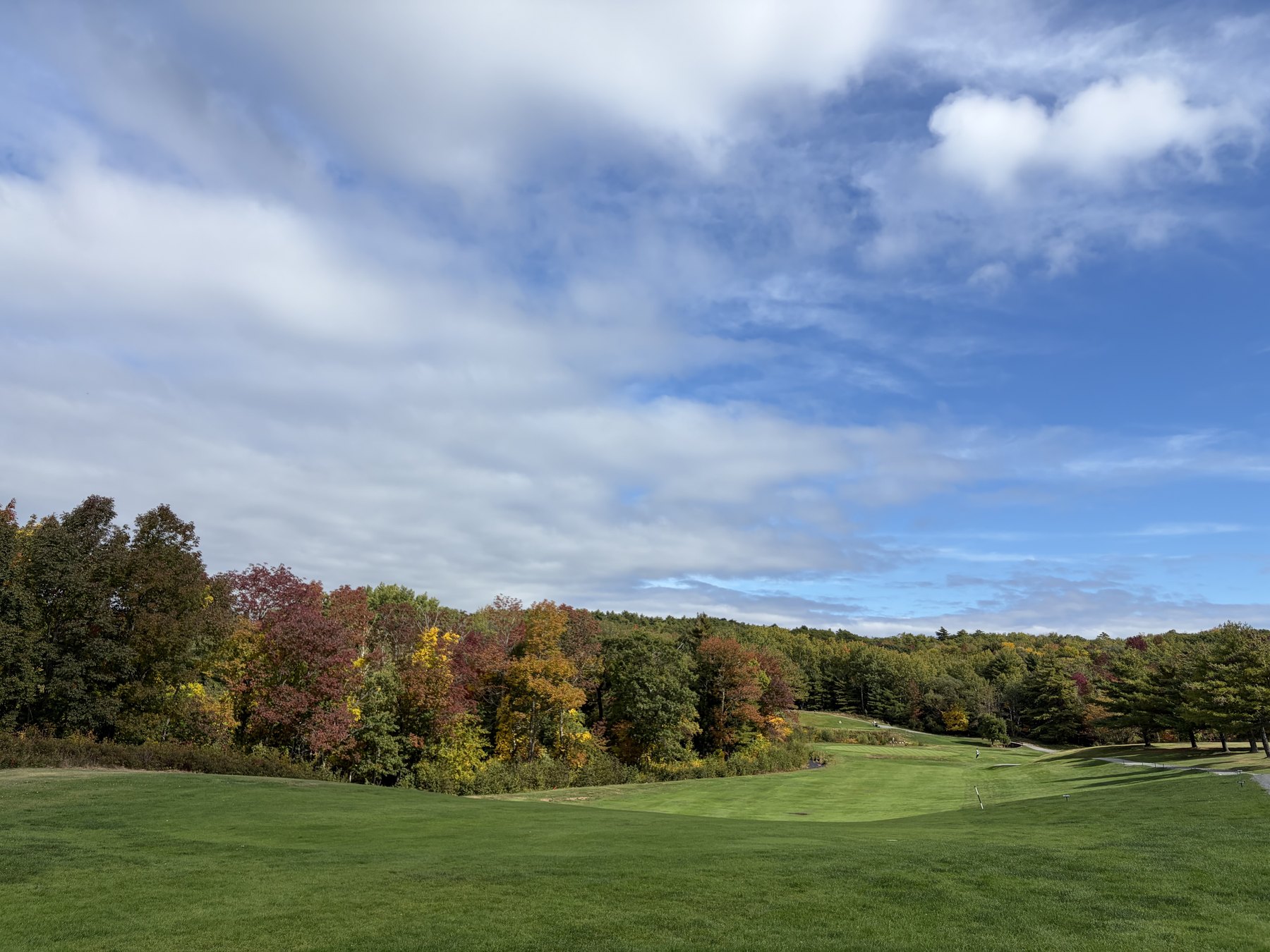
In Bar Harbor I stayed near downtown and worked while rain moved through. The weather cleared the next day, just enough for one more round at Kebo Valley Golf Club, one of the oldest courses in the country.
Fall had become visible by then — green giving way to yellow, orange and red.
I couldn’t finish all eighteen before the light went, and it didn’t bother me. A few weeks earlier I might have cared more about the scorecard.
Sometimes you get eighteen holes.
Sometimes you get fourteen or sixteen.
Sometimes the hotel you booked doesn’t open the door.
Sometimes the place you never intended to visit leaves breakfast waiting for you in the morning.
The trip keeps going either way.
🧭 What the Road Actually Wrote
When I left New Jersey, I had a remarkably detailed itinerary, and I’m glad I did. Planning made the trip possible while continuing to work — an electric car across thousands of miles, hotels and tee times, a bike and camping equipment across two countries, and enough structure to know roughly where I needed to be.
But the itinerary isn’t what I will remember.
I’ll remember sleeping in the BMW at 1% battery, and the unexpected nine holes after mountain biking in New Hampshire. A sweepstakes that sent me to Newport and created a memory I will cherish for the rest of my life. The hotel that failed in St. Stephen and accidentally sent me to the Algonquin. Karen’s breakfast in Little Shemogue. Racing darkness around Cabot Links with Maddie and Sarah. A seafood dinner in St. Andrews that introduced me to Paul and Susie. And the first real colors of fall across Kebo Valley as the trip approached its end.
None of it could have been planned. Maybe that was the point.
I started out partly wanting some distance from ordinary life — enough space to clear my mind and think. I don’t know that I found answers. I’m less convinced now that answers were what I needed.
Travel changes the scale of things. For a while the questions get simpler: where am I sleeping tonight, how much battery do I have, can I finish before dark, who is sitting beside me at dinner, where does this road go next.
And somewhere inside those smaller questions, the larger ones get quieter.
The route got me to Cape Breton and back.
Everything that happened in between was the story.