The Surgeon Who Camouflaged Augusta
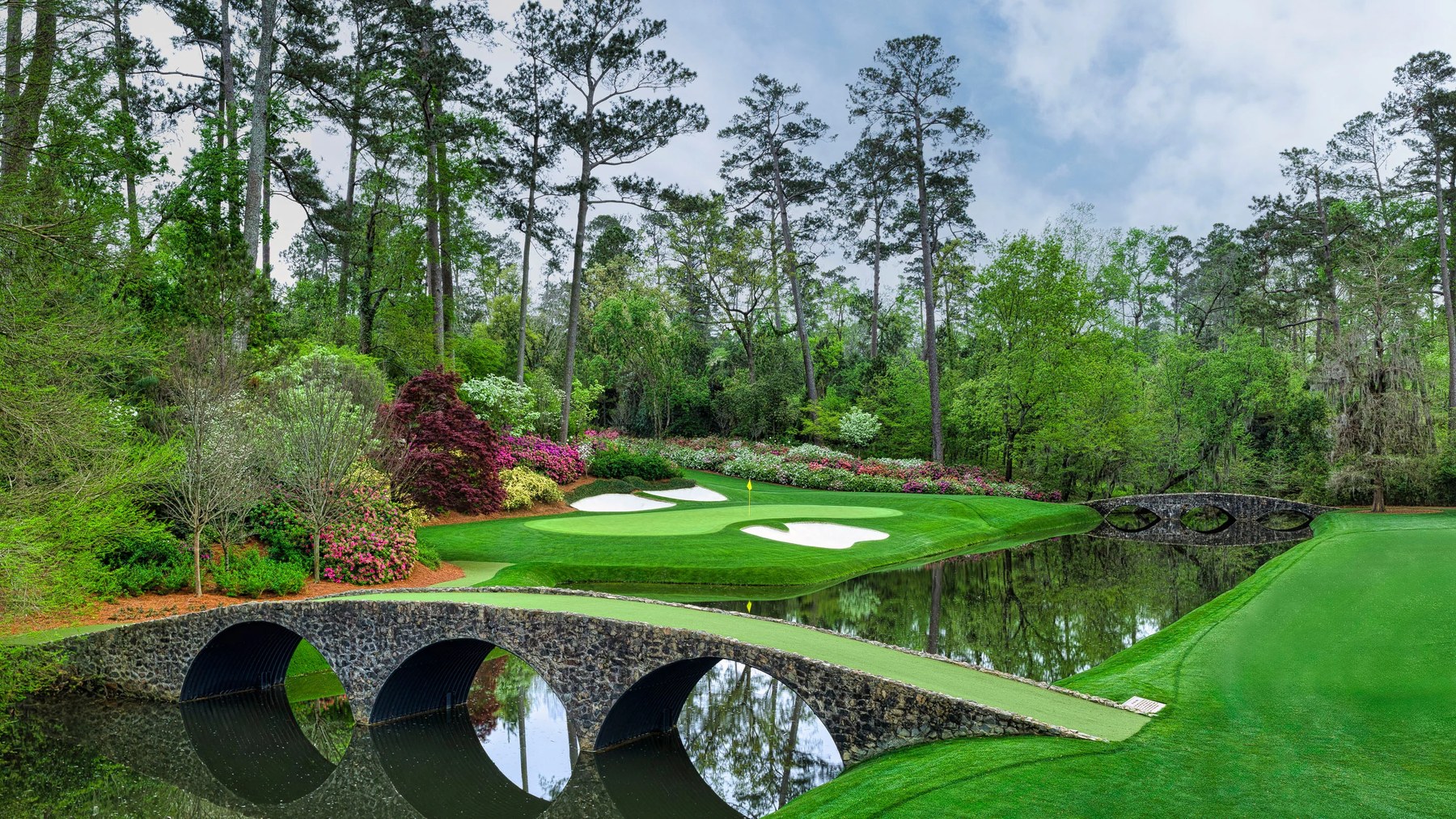
MacKenzie's insight was that the most effective design is the design you cannot see. Augusta looks like a garden and plays like an examination, and the gap between those two facts is the whole craft — a reminder that in any well-built system, the absence of visible constraint is not the absence of constraint.
Alister MacKenzie died on 6 January 1934, at his home beside the Pasatiempo golf course in California. He was broke. The club he had just finished designing in Georgia still owed him a substantial part of his fee, and he had spent his last months writing letters asking for it. Ten weeks after he died, that club held the first Augusta National Invitation Tournament — the event the world now calls the Masters.
He never saw a shot struck in it.
That is the first surprising thing about the man who shaped the most watched piece of ground in golf. The second is what he did before he designed golf courses.
From battlefield to bunker
MacKenzie trained as a physician. He studied at Cambridge, qualified in medicine, and practised in Leeds. Then the Second Boer War took him to South Africa as a civil surgeon, and there he became fascinated by something outside his profession entirely: how the Boer commandos disappeared.
They were irregulars, badly outnumbered, and they survived by making themselves and their earthworks impossible to read against the veld. MacKenzie studied their methods closely enough that he came back an evangelist for concealment, and he is credited with helping establish the British Army’s camouflage instruction — a striking second career for a Leeds doctor, and one the Cultural Landscape Foundation notes alongside his design work.
What makes this more than trivia is that he drew the connection himself. His 1920 book Golf Architecture argues the two disciplines are the same problem: the art of making something man-made read as though it had always been there. As the camouflage historian Roy Behrens has documented, MacKenzie moved between military deception and landscape design as if the boundary were an administrative detail rather than a real one.
The military version hides a trench from an observer. The golf version hides the earthmoving from a golfer. In both cases the test is the same: can you tell that a human decided this?
What he and Jones actually built
Bobby Jones retired from competition in 1930, at twenty-eight, having won the Grand Slam. He wanted to build a course. He had seen MacKenzie’s Cypress Point and understood he had found the right collaborator, and the two of them walked the site at Fruitland Nurseries in Augusta — a former plantation turned commercial nursery, which is why the property is full of specimen plants and why the holes carry the names of flowers.
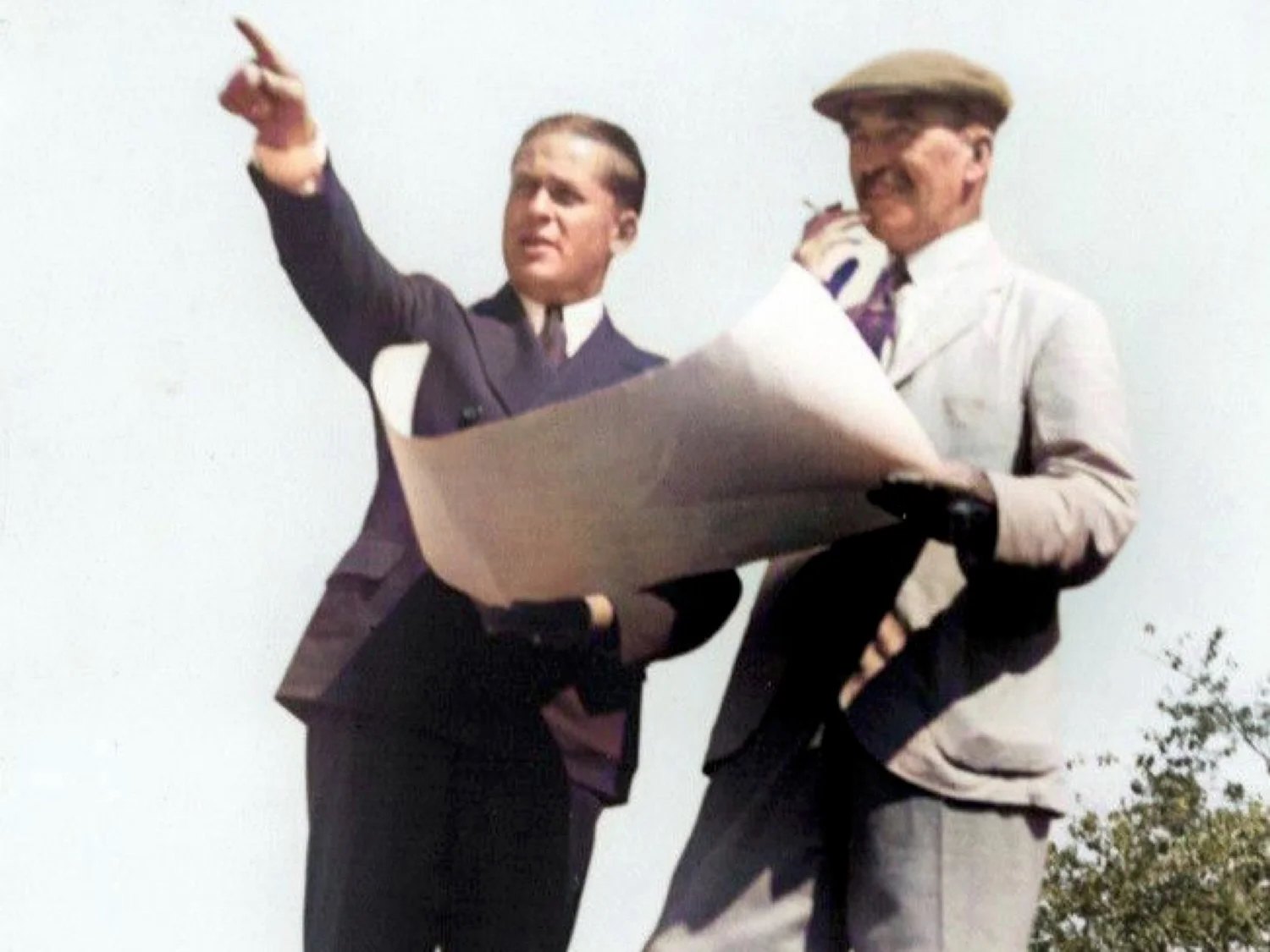
The course they built was, by the standards of 1930s American golf, close to eccentric.
It had almost no bunkers. Roughly two dozen, on a property where a conventional architect of the era would have used a hundred. The fairways were enormously wide. The greens were vast and severely contoured. There was no rough worth the name. Jones’s brief was that a member should be able to get round and enjoy it, while a great player trying to score should find the course asking harder and harder questions.
Both men were explicit that the model was the Old Course at St Andrews, and the borrowed idea was strategic rather than penal design. A wide fairway is not generous; it is a question. Every pin position converts one part of that width into the correct part and the rest into a slow, undramatic penalty. You are never stopped. You are simply, repeatedly, in slightly the wrong place, and by the time it matters you cannot say where it went wrong.
That is camouflage logic applied to a scorecard. The difficulty is concealed inside something that presents itself as beauty. Nothing looks like it is defending itself. LINKS Magazine’s survey of his work makes the point that this restraint is the MacKenzie signature across Cypress Point, Royal Melbourne, Crystal Downs and Pasatiempo — Augusta is the most famous example, not the purest one.
And here the honest caveat: very little of MacKenzie’s actual construction survives. Augusta has been rebuilt continuously for ninety years — the nines were swapped in 1935, Perry Maxwell, Robert Trent Jones and Tom Fazio all worked on it, and the course now plays hundreds of yards longer than it did. What endures is not MacKenzie’s bunkering. It is his premise: that the course should not look like it is trying. Today’s Golfer’s account of his life is blunt about the irony — the man is inseparable from a place that has largely replaced his work and could not find the money to pay him while he lived.
What it looks like in person
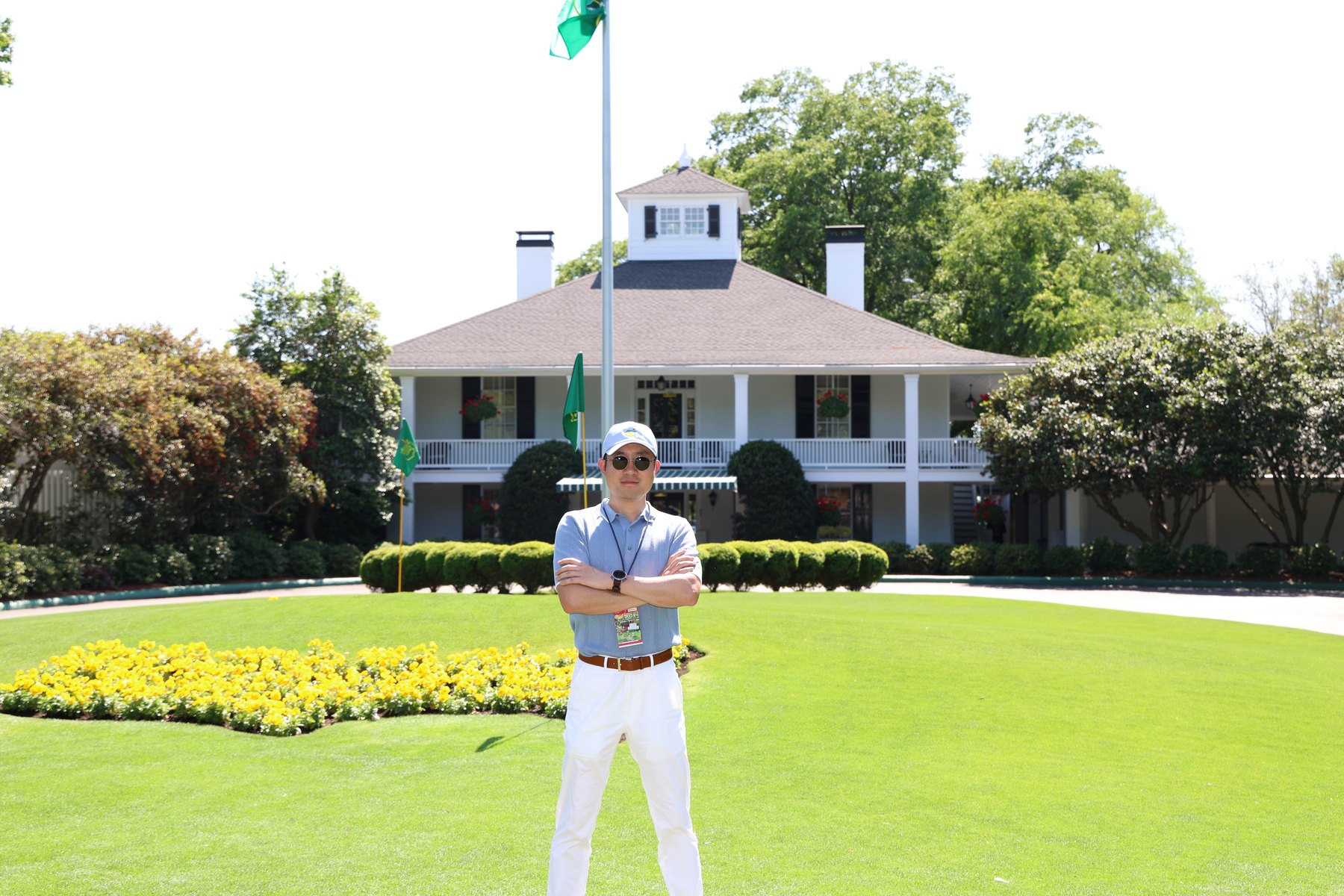
I went to the Masters in 2024, and the thing nobody prepares you for is the elevation. Television flattens Augusta into a green carpet. Standing on it, the ground moves constantly — the drop from the 10th tee, the fall away from the 18th fairway, the way the ground at Amen Corner tilts toward the water without ever appearing to. On screen the 12th looks like a short iron over a creek. In person it looks like a decision.
That is precisely the effect MacKenzie was after, and it is slightly unnerving to notice it working on you.
On the same trip I played Forest Hills, a few minutes from the National — a Donald Ross course, and the place where Bobby Jones won the 1930 Southeastern Open in the year he completed the Grand Slam. It is a public course now, home to the university team. Standing on ground Jones won on, a short drive from ground Jones commissioned, the history of American golf compresses into an afternoon. I also played Lanier Islands, up near the lake — no comparable history, a good day’s golf, and a useful reminder that most golf is just golf.
I will admit a bias about the tournament itself. I think Tiger Woods in 2019 is the best win in the history of the game. Forty-three years old, eleven years since his last major, a body rebuilt, chasing from two behind on Sunday — and winning not by overpowering the course but by being the last man making correct decisions on greens that punish incorrect ones. Augusta was designed to reward exactly that. It took nearly ninety years and the most scrutinised comeback in sport to show the design working as intended.
What the pattern is
MacKenzie’s career suggests something uncomfortable and broadly useful: the most effective design is the design you do not perceive as design.
A hazard you can see, you can plan around. A wide fairway that quietly makes one line correct and the other three merely acceptable shapes behaviour far more reliably, because you never experience it as a constraint. This is why concealment and beauty are not opposites in landscape work. Both are techniques for making a made thing read as a given thing.
That pattern shows up wherever environments shape choices — in how institutions set defaults, in how organisations route information, in how any system arranges the easy path so that it happens to be the intended one. The visible rule invites argument. The invisible arrangement rarely does, which is what makes it powerful and what makes it worth examining.
Where the parallel breaks down is intent. MacKenzie concealed his hand in service of the player’s pleasure; he wanted the golfer to feel the course was found rather than built, and to be tested without being bullied. Concealment as a technique carries no guarantee about the ends it serves, which is why “you cannot see the design” is a description and not a compliment.
Still, the next time a bunker at Augusta looks as though it simply belongs where it is, it is worth remembering that a Leeds surgeon learned to think that way by watching men make themselves invisible on the veld — and that the effect you are admiring is the point.