The Mechanism That Ate Itself: How Institutions Redistribute Power
Institutions rarely eliminate power. More often, they redistribute it. Every governance mechanism creates a new order, and that order gradually reshapes the incentives of the people living within it. The greatest threat to a mechanism is often not opposition, but adaptation.
🏛️ The Redistribution of Order
History is often written as the rise and fall of institutions.
Democracy replaces tyranny.
Empires collapse.
Laws are enacted, abused, and repealed.
Looking more closely, however, I increasingly wonder whether history tells a subtler story.
Perhaps institutions rarely eliminate power.
Perhaps they simply redistribute it.
In a recent reflection on entropy, evolution, and AI, I explored the idea that local order never comes for free. The Second Law of Thermodynamics tells us that physical systems maintain local order only by exchanging energy and matter with their surroundings while increasing entropy overall. Whether that analogy extends beyond physics is, of course, another question. I do not think history literally obeys thermodynamics.
Yet the idea has changed the kinds of questions I ask.
Instead of asking whether an institution succeeded or failed, I find myself asking:
When an institution creates order, where does that order eventually move?
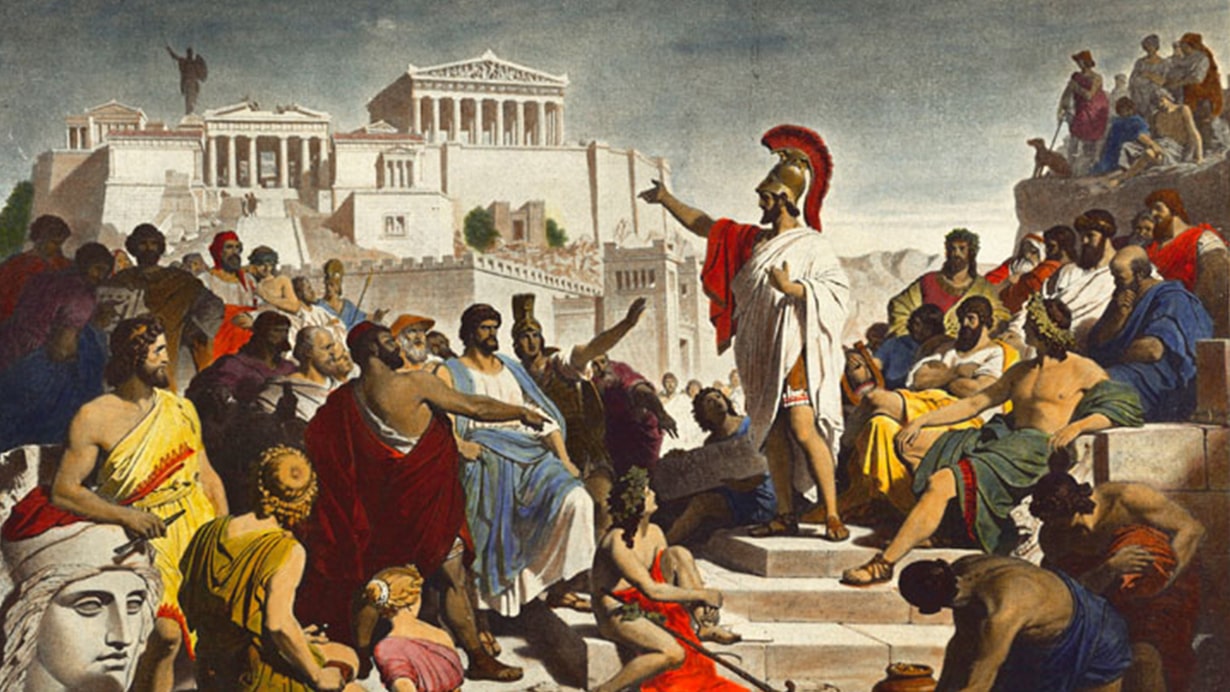
Ancient Athens provides one of the clearest examples I have encountered.
⚖️ The Mechanism
Ostracism was in all likelihood introduced during the reforms of Kleisthenes in 508/507 BCE, when the Athenian constitution was reorganised on democratic lines after four decades of tyranny.
The logic was remarkably simple.
Its purpose was not to punish crimes or settle disputes.
Its purpose was simply to prevent excessive political power from accumulating in the hands of a single individual before tyranny could emerge.
The procedure itself was elegantly minimal.
The decision to hold an ostracism was first presented to the popular assembly, the ekklesia. If the assembly agreed, a special meeting known as the ostracophoria was organised in the agora. Citizens voted by scratching a candidate’s name onto a piece of pottery—an ostrakon. Voting was anonymous. If at least 6,000 votes were cast, the individual receiving the most votes was exiled for ten years.
No trial.
No charges.
No appeal.
Purely prophylactic.
As Aristotle records in the Athenaion Politeia, the law existed “owing to the suspicion felt against the men in the positions of power, because Peisistratus when leader of the people and general set himself up as tyrant.”
What strikes me is not merely the institutional design, but what it attempted to accomplish.
It did not eliminate ambition.
It did not eliminate political competition.
Instead, it attempted to reorganize political incentives.
Power itself did not disappear.
It was simply given a different path through which to flow.
🗳️ The Pre-Marked Ballots
By 493 BCE, Themistocles had become archon, and a decade later orchestrated the naval strategy that secured Athens’ decisive victory over Persia at the Battle of Salamis in 480 BCE.
Yet around 471 BCE, he himself was ostracised.
The archaeology surrounding that vote is remarkable.
A cache of 190 ostraka bearing the name of Themistocles was discovered in a well on the northern slope of the Acropolis. The catalogue of the American School of Classical Studies at Athens records that analysis of the handwriting suggests these sherds were written by only fourteen individuals.
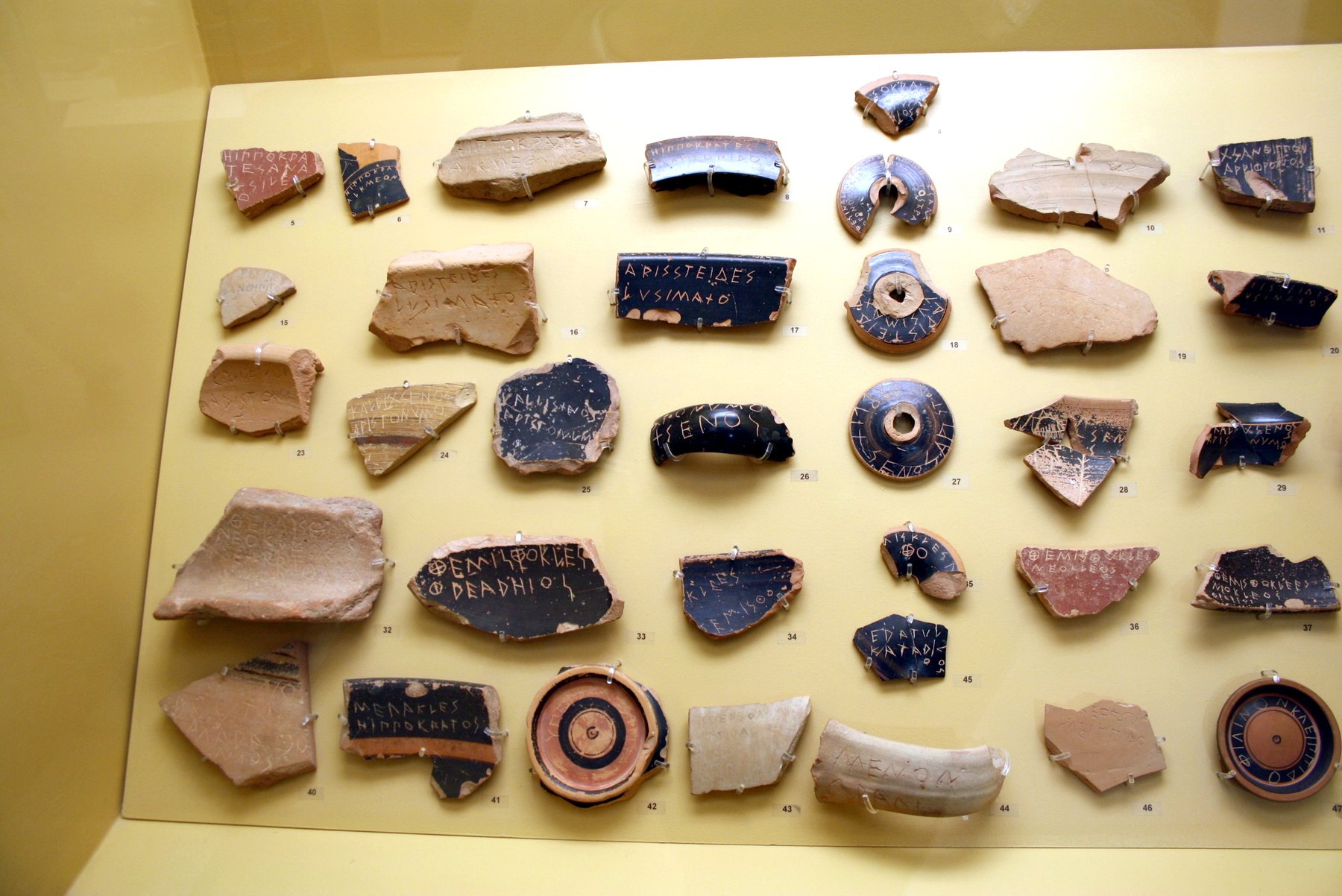
These were probably the ancient equivalent of pre-printed campaign materials.
Illiterate citizens no longer needed to write the name themselves.
Someone else had already done it.
The historical significance, to me, is not that the vote could be manipulated.
Rather, it is how little manipulation was required.
No constitutional amendment.
No military coup.
No abolition of democracy.
Only a small reduction in the transaction cost of directing votes.
The institution still existed.
The procedure still functioned.
The pottery shards were still counted.
Yet something fundamental had already shifted.
The constitutional order created by ostracism was no longer constraining political factions.
Political factions had begun reorganizing themselves around the mechanism itself.
The order had not disappeared.
It had simply moved.
🎭 The Kill Shot: Hyperbolos, 416–415 BCE
| Year | Event |
|---|---|
| 480 BCE | Battle of Salamis; Themistocles at peak influence |
| ~471 BCE | Themistocles ostracised, likely aided by pre-written ostraka |
| 416–415 BCE | Hyperbolos ostracised after Alcibiades and Nicias cooperate |
| After 415 BCE | No further ostracism ever held |
By the final decades of the fifth century BCE, the two dominant figures in Athenian politics were Alcibiades and Nicias.
They disagreed on almost everything.
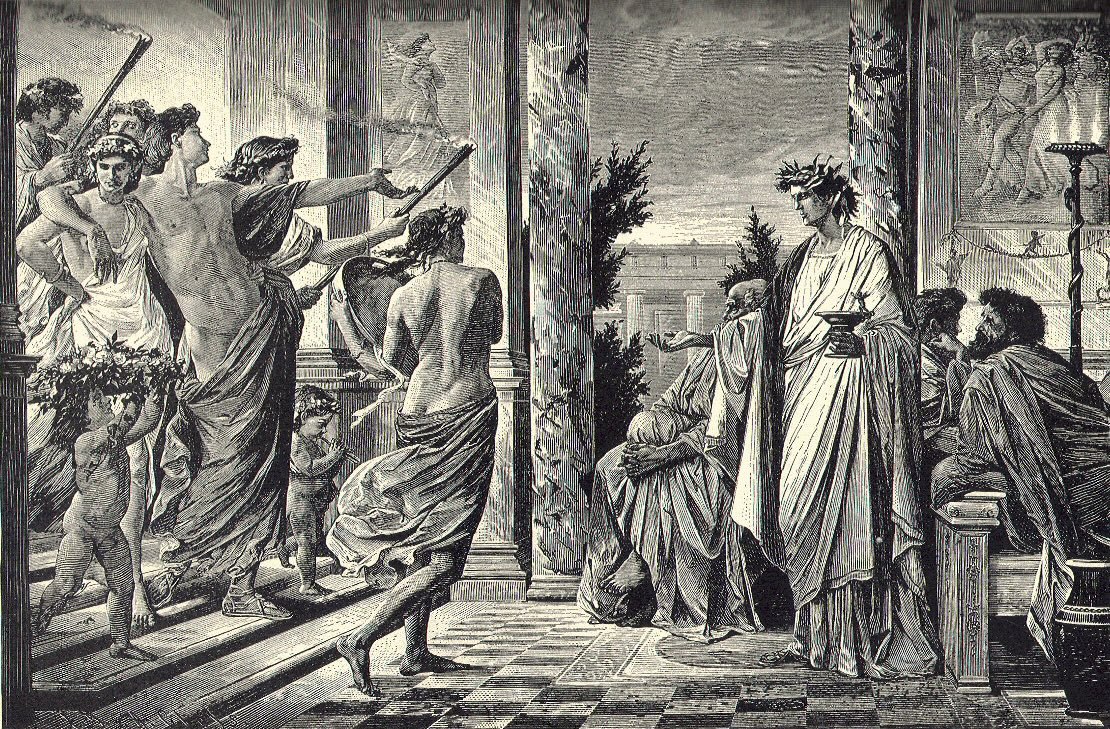
According to Plutarch, Hyperbolos believed that proposing an ostracism would remove one of them from political life.
Instead, something unexpected happened.
The rivals quietly coordinated.
As Plutarch records in his Life of Nicias, Alcibiades and Nicias “took secret counsel with one another, united and harmonized their factions,” resulting in Hyperbolos himself being ostracised.
To me, this is the pivotal moment.
Nothing about the institution changed.
The law remained valid.
The voting procedure remained unchanged.
The pottery was still counted exactly as before.
Only the incentives surrounding the institution had changed.
The two most powerful participants discovered that cooperation benefited them more than competition.
From that moment onward, ostracism ceased to function as democracy’s immune system.
Not because anyone repealed it.
Because the surrounding political system had adapted.
No ostracism was ever held again.
🔄 Institutions Rarely Eliminate Power
The story increasingly makes me wonder whether history is less about creating and destroying order than about redistributing it.
Ostracism undoubtedly created constitutional order.
For nearly a century, it constrained concentrations of political power.
But that very order gradually generated new incentives.
Political leaders adapted.
Supporters coordinated.
Voting became organized.
Eventually, the institution itself became another strategic resource.
Seen this way, Athens did not suddenly lose political order.
Rather, order migrated—from constitutional procedure toward factional coordination.
The same pattern seems to appear repeatedly throughout history.
Markets redistribute economic power.
Bureaucracies redistribute administrative power.
Technologies redistribute information.
Artificial intelligence is already redistributing cognitive work.
The question is rarely whether order exists.
The question is where it exists, who maintains it, and who ultimately benefits from its redistribution.
🌊 We Inherit More Than We Create
One lesson I keep returning to is how little of history any individual truly authors.
We naturally celebrate great leaders and innovators.
Yet they always operate within languages, institutions, cultures, technologies, and historical moments they did not create.
Leo Tolstoy argued throughout War and Peace that history is rarely the product of isolated “great men.” Instead, it emerges from countless interacting decisions whose combined effects no individual fully intends.
Perhaps institutions behave similarly.
Most of the order surrounding us is inherited rather than invented.
Democracy.
Markets.
Universities.
Scientific traditions.
Legal systems.
Even the mechanisms designed to constrain power eventually become part of the environments future generations inherit.
Perhaps this is why institutional reform is so difficult.
We imagine ourselves redesigning society.
More often, society is quietly redesigning us.
📜 The Lesson
Athens did not fail because ostracism was imperfect.
No governance mechanism is perfect.
What fascinates me is something more general.
Kleisthenes created an institution that constrained concentrated political power for nearly a century.
Yet eventually the institution became part of the political game itself.
Not because anyone abolished it.
Because the surrounding system adapted.
Perhaps that is one of history’s recurring patterns.
We create institutions to organize society.
Those institutions reshape incentives.
The incentives reshape people.
People eventually reshape the institutions.
The order never truly disappears.
It simply moves somewhere else.
Whether that has anything to do with entropy in the physical sense, I honestly don’t know.
Physics should not be stretched beyond where it belongs.
But as a way of thinking about history, I find the analogy increasingly compelling.
Perhaps civilizations are not simply stories about creating or destroying order.
Perhaps they are stories about redistributing it.
And perhaps the most important question is not whether a mechanism works today, but:
When this mechanism succeeds, what new incentives—and what new forms of order—will it quietly create tomorrow?