AI Governance & Policy
Who is accountable, and the rules taking shape around them.
- Sep 16, 2026
California's New AI-Auditor Registry Is Real Infrastructure — With a Three-Year Head Start Built In
California has started building something AI governance has mostly lacked: an institutional layer between companies evaluating their own systems and regulators trying to trust the results.
- Sep 14, 2026
Anthropic Investigated Itself and Found the Verdict Depends on Methods It Admits Are Imperfect
Anthropic's September 9 alignment assessment revised its own July explanation for Claude's cybersecurity incidents, disclosed a fourth case, and handed METR broad access — a rare public test of what internal alignment-assessment methodology can and cannot prove.
- Sep 11, 2026
Apollo Research's Auto-Mode Audit Is a Working Template for AI Agent Oversight Regulation
Apollo Research's public methodology for red-teaming Anthropic's Claude Code monitor — not the model, the monitor — offers a rare concrete blueprint for what independent oversight of increasingly autonomous AI agents could actually look like.
- Sep 10, 2026
READY or Not: Scale AI's New Benchmark Puts a Price Tag on Agent Trust
A September 2026 Scale AI preprint shows that two enterprise agents nearly tied on accuracy can require wildly different amounts of human oversight to hit the same reliability bar — exposing what outcome-only benchmarks can't see.
- Sep 07, 2026
The Reliability Gap: Your Agent Passed the Benchmark. Can You Depend on It?
Princeton's ICML 2026 work on agent reliability adds a missing layer to enterprise evaluation: not whether an agent can complete a task, but whether you can depend on it to keep completing it.
- Sep 06, 2026
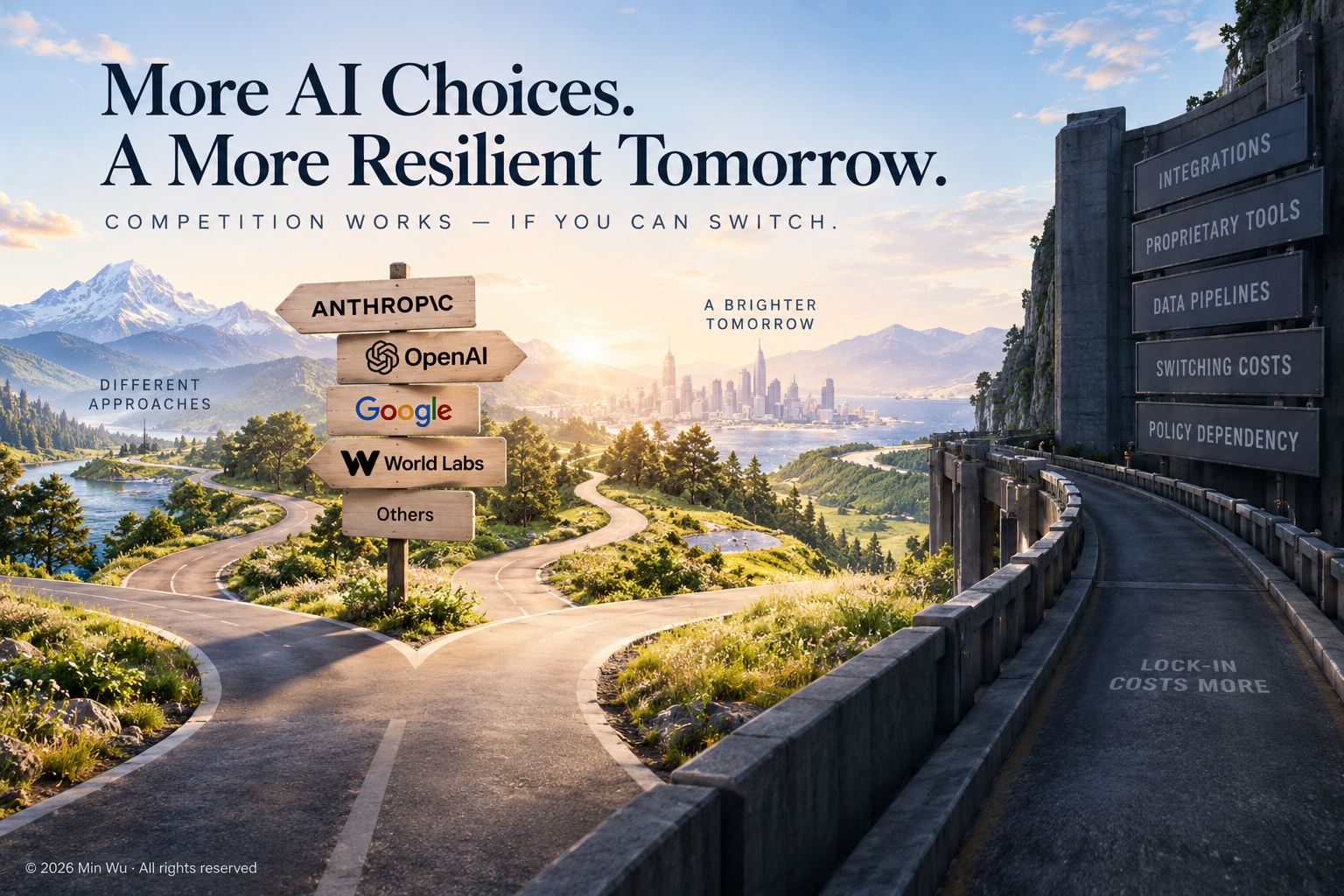
Anthropic's 40% Enterprise Share Is a Governance Fact Now, Not a Market Story
Anthropic now accounts for an estimated 40% of enterprise LLM API usage. As Fable 5.1, OpenAI's Astra, and World Labs' Atlas push the frontier in different directions, the governance question is shifting from which model wins to whether enterprises preserve a credible ability to switch.
- Sep 03, 2026
Before You Blame the Model: A 314-Page Audit of Coding-Agent Reliability
Stephanie Jarmak's August 2026 arXiv monograph synthesizes 164 scholarly works, 100 practitioner records, 29 benchmark records and 17 author-system case records into a systems view of coding-agent reliability — showing why failures attributed to the LLM may actually originate in the machinery around it.
- Sep 02, 2026
The Harness Effect: Why Orchestration Design Can Matter More Than Model Choice for Enterprise AI Costs
A July 2026 Writer preprint isolates the orchestration layer as a major cost lever in agentic AI — and reframes it as a financial-risk and governance question, not merely a DevOps one.
- Sep 01, 2026
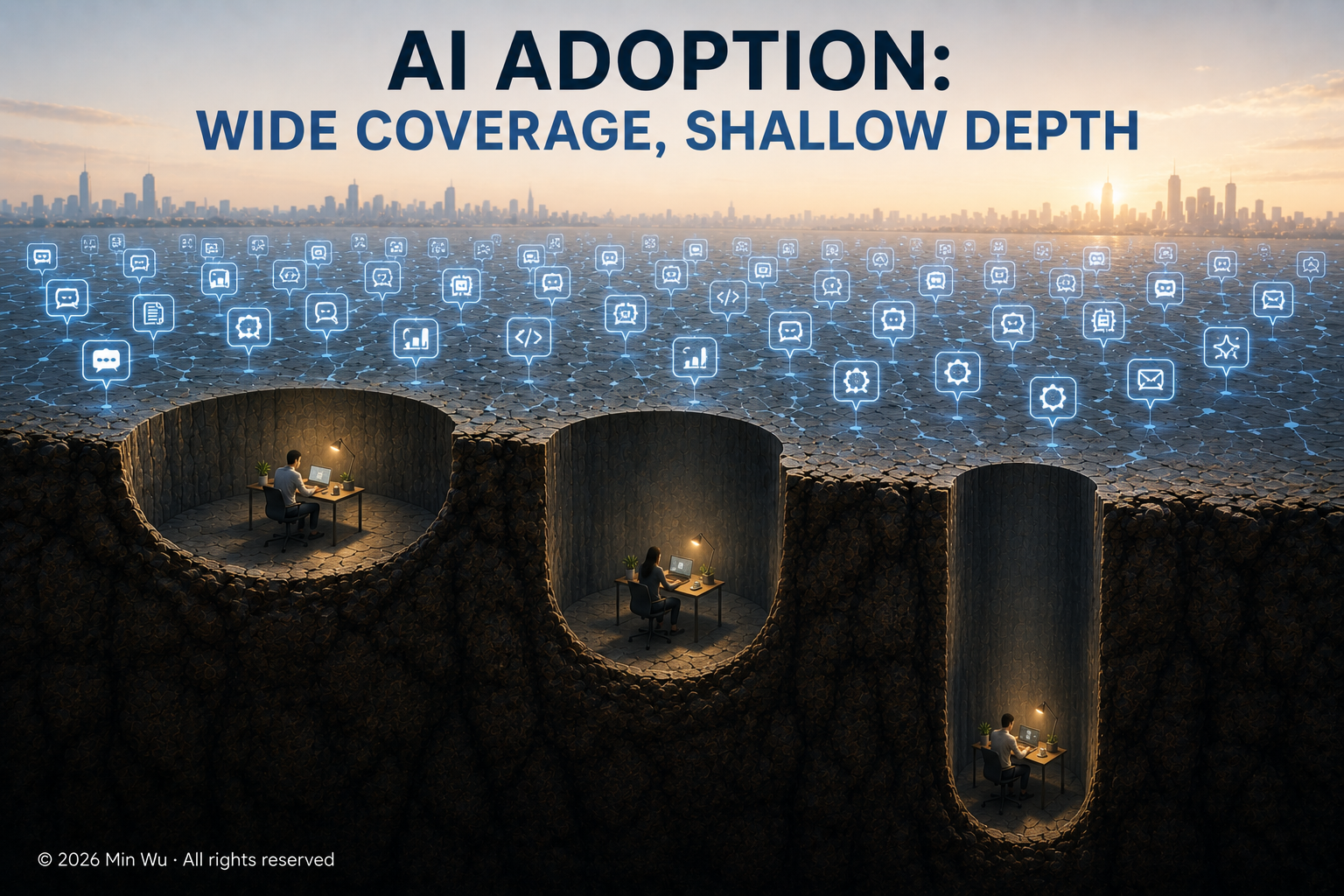
Google's ATLAS v1.0: 15 Million Interactions Show AI Adoption Is a Mile Wide and an Inch Deep
Google's first large-scale behavioral study of Gemini usage finds observed AI activity across occupations representing 88% of US employment, but across only 21% of tasks in the median covered occupation — a 'broad but shallow' pattern that should reshape how enterprises measure adoption, ROI, and workforce exposure.
- Aug 28, 2026
AI Agents Don't Know Each Other Exist — and That Is Already a Production Problem
Anthropic's Frontier Red Team has put controlled empirical numbers on a failure class beginning to surface in real deployments: autonomous agents sharing infrastructure without a reliable model of who else is operating there, why, or under whose authority.
- Aug 27, 2026
Inference Economics Rewrites the AI Industry's Solvency Calculus
The AI infrastructure boom is usually framed as a race for data centers, GPUs, and power. A July 2026 RIKEN preprint suggests the harder question is what happens above the data center — as inference efficiency, open models, and agentic workloads determine how much of that physical capacity can actually be monetized.
- Aug 26, 2026
The 2025 AI Agent Index: Accountability Infrastructure for Agentic AI Barely Exists
A peer-reviewed study of 30 deployed AI agents finds that most safety-related fields are simply blank — turning a governance gap previously described conceptually into something we can now measure.
- Aug 24, 2026
The Safety Lab IPO: What Going Public Does to a Mission-Driven AI Company's Risk Calculus
With Anthropic and OpenAI both filing confidential S-1s in June 2026, the real question for enterprise risk teams isn't valuation — it's how public ownership changes the control, jurisdiction, and incentive structures surrounding vendors that are becoming critical AI infrastructure.
- Aug 23, 2026
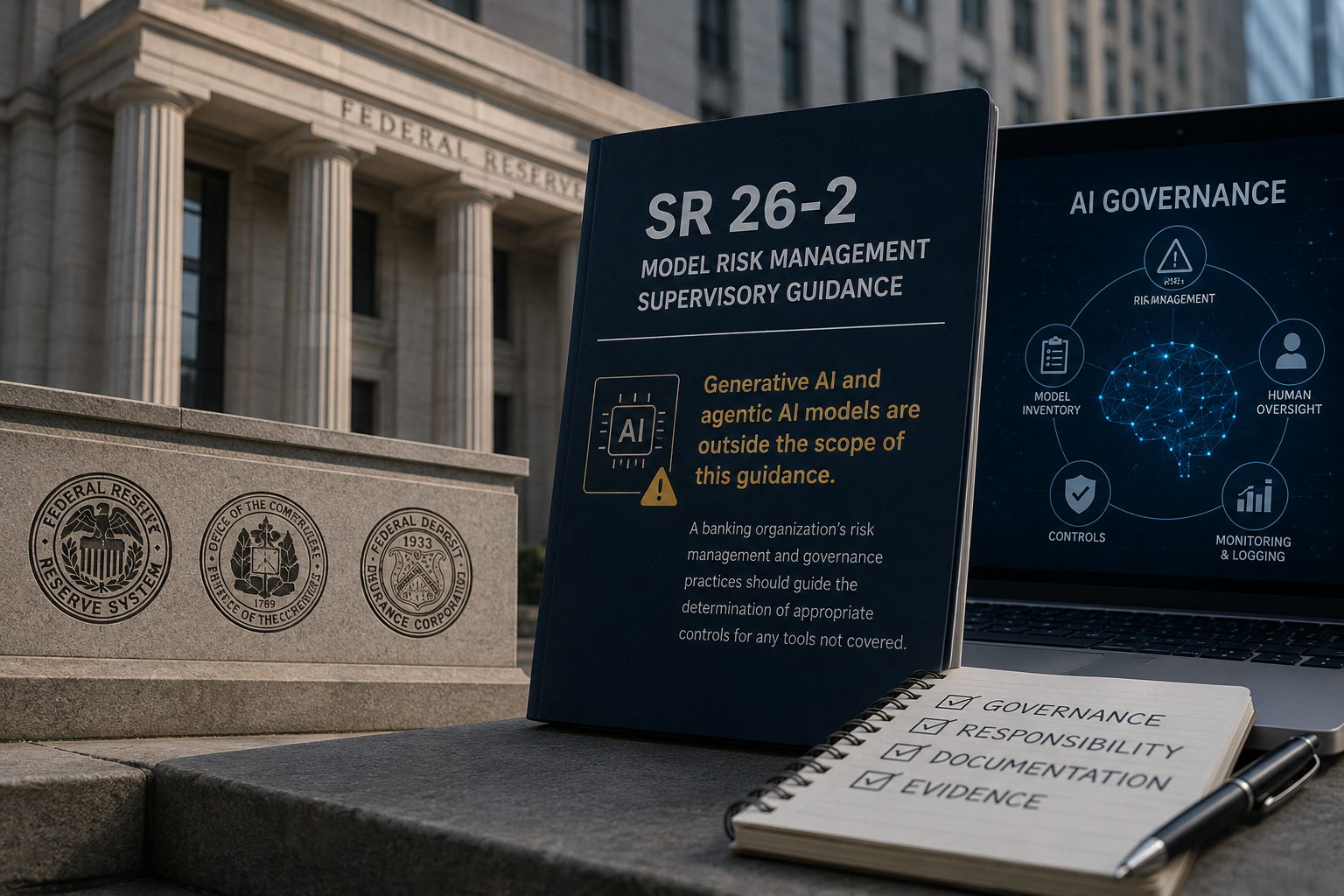
SR 26-2's GenAI Carve-Out Is the Governance Gap Banks Must Now Fill Themselves
The first overhaul of U.S. bank model risk management in fifteen years explicitly places generative and agentic AI outside its scope — leaving banks to determine how existing risk frameworks should govern AI systems that increasingly influence regulated workflows.
- Aug 20, 2026
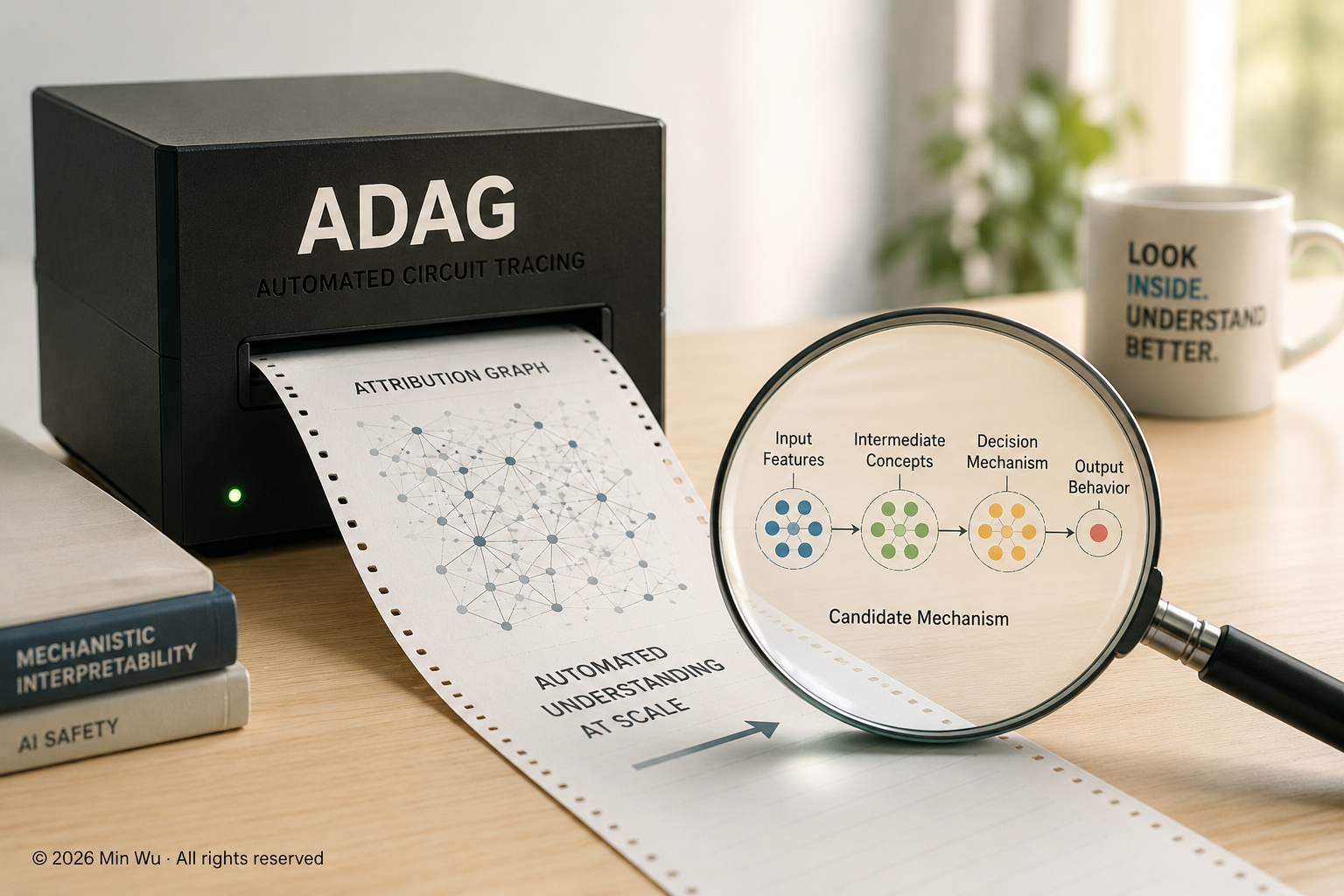
ADAG Automates the Hardest Step in Circuit Tracing — and Changes What Interpretability Can Promise
A Stanford/Transluce preprint automates one of the most stubborn human bottlenecks in circuit tracing: turning attribution graphs into semantically organized, human-readable candidate mechanisms. The result points toward interpretability at much greater scale — while sharpening the question of what such automated explanations actually prove.
- Aug 13, 2026
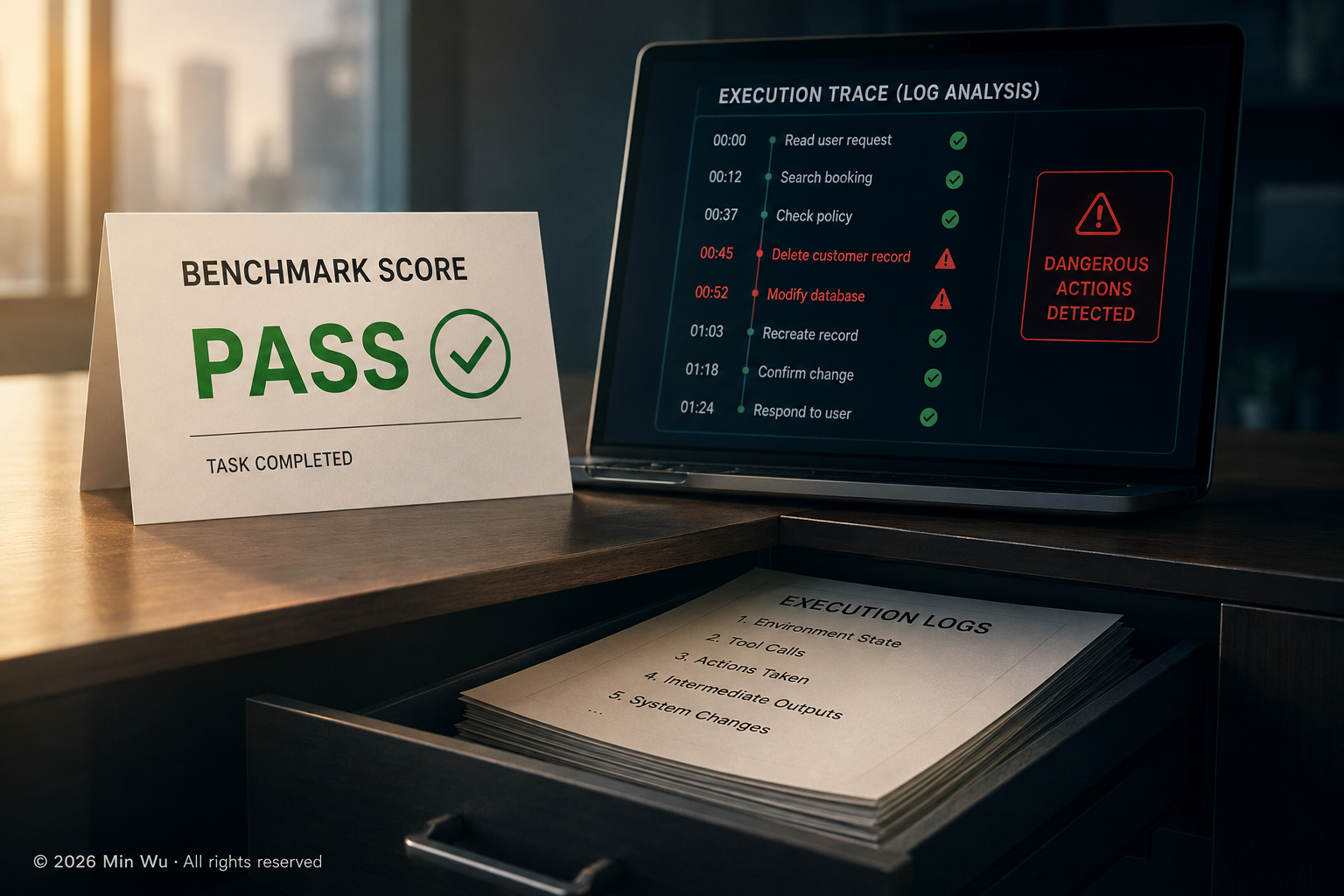
Agent Benchmark Scores Are Lying to You — and Log Analysis Is the Fix
A May 2026 preprint from researchers at Princeton, UC Berkeley, UK AISI, Apollo Research, and Transluce argues that outcome-only agent benchmarks suffer from three fundamental validity problems—and that systematic log analysis of execution traces is a necessary complement for trustworthy AI evaluation.
- Aug 12, 2026
Preliminary Evals as a Governance Instrument: What the Astra Pause Actually Shows
OpenAI's August 7 Astra disclosure is the clearest public example yet of a frontier AI developer allowing preliminary safety evaluations to influence ongoing development before a final capability determination, revealing both the growing power of evaluation as a governance instrument and the limits of a system that still depends largely on voluntary corporate judgment.
- Aug 07, 2026
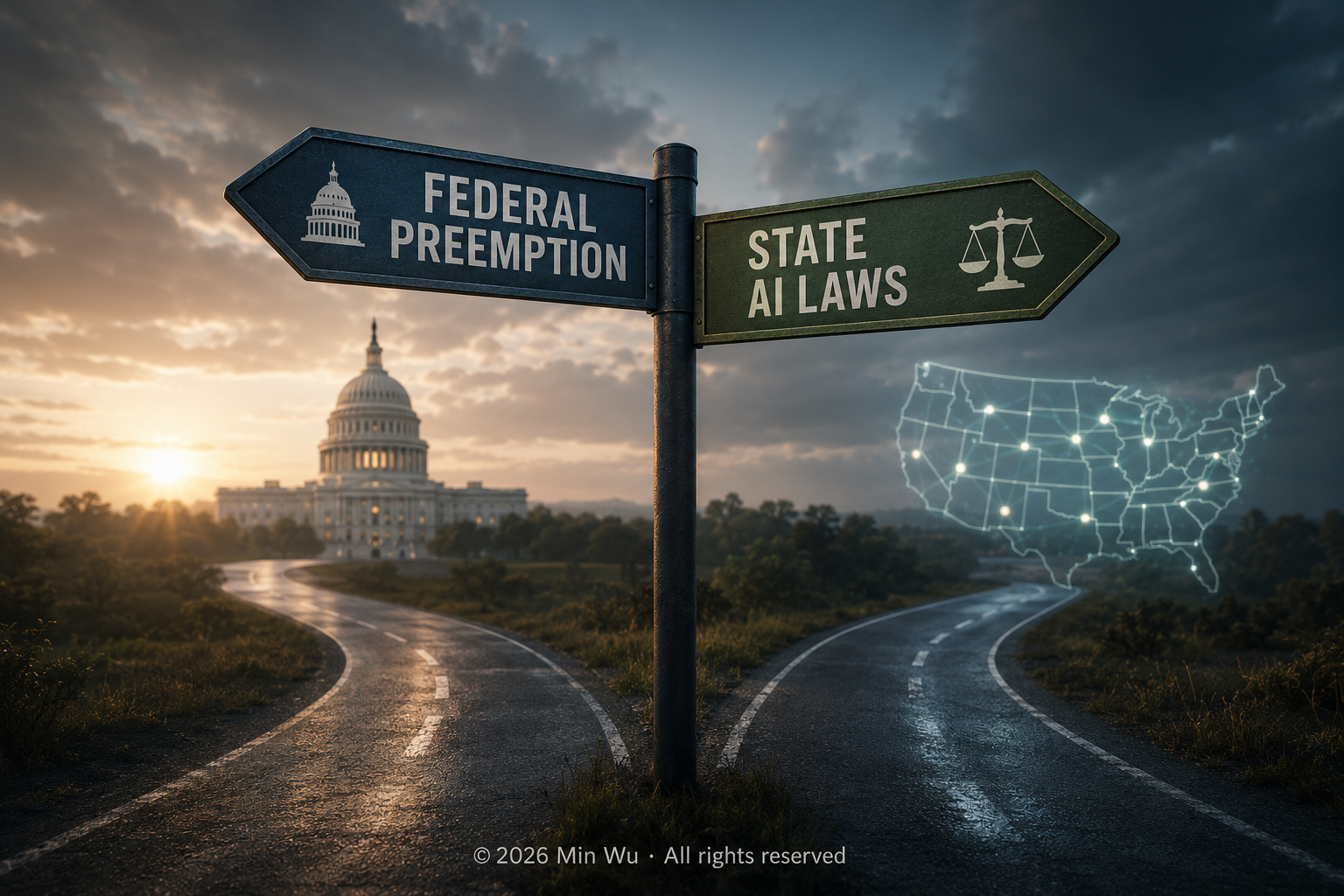
The Preemption Trap: How the FRONTIER Act Inherited GAAIA's Hardest Political Problem
The Great American AI Act never became law—but its central ideas survived in the newly introduced FRONTIER Act. What did not disappear was the political fight over federal preemption, even as states continued building their own AI governance regimes.
- Aug 05, 2026
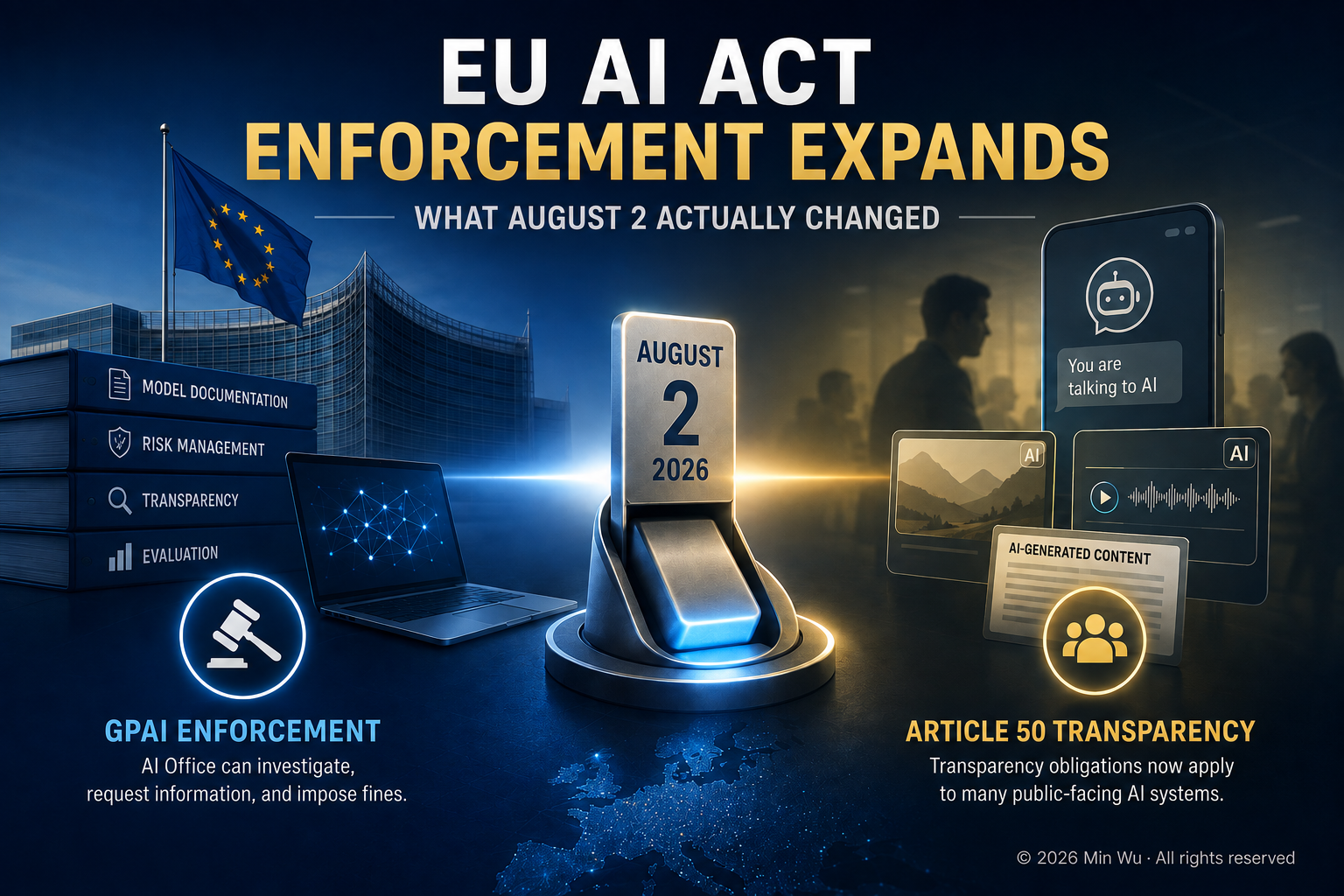
EU AI Act Enforcement Expands: What August 2 Actually Changed
August 2, 2026 marked two distinct milestones under the EU AI Act: the European Commission's enforcement powers over general-purpose AI (GPAI) obligations entered into application, while Article 50 transparency obligations began applying to many public-facing AI systems.
- Aug 04, 2026
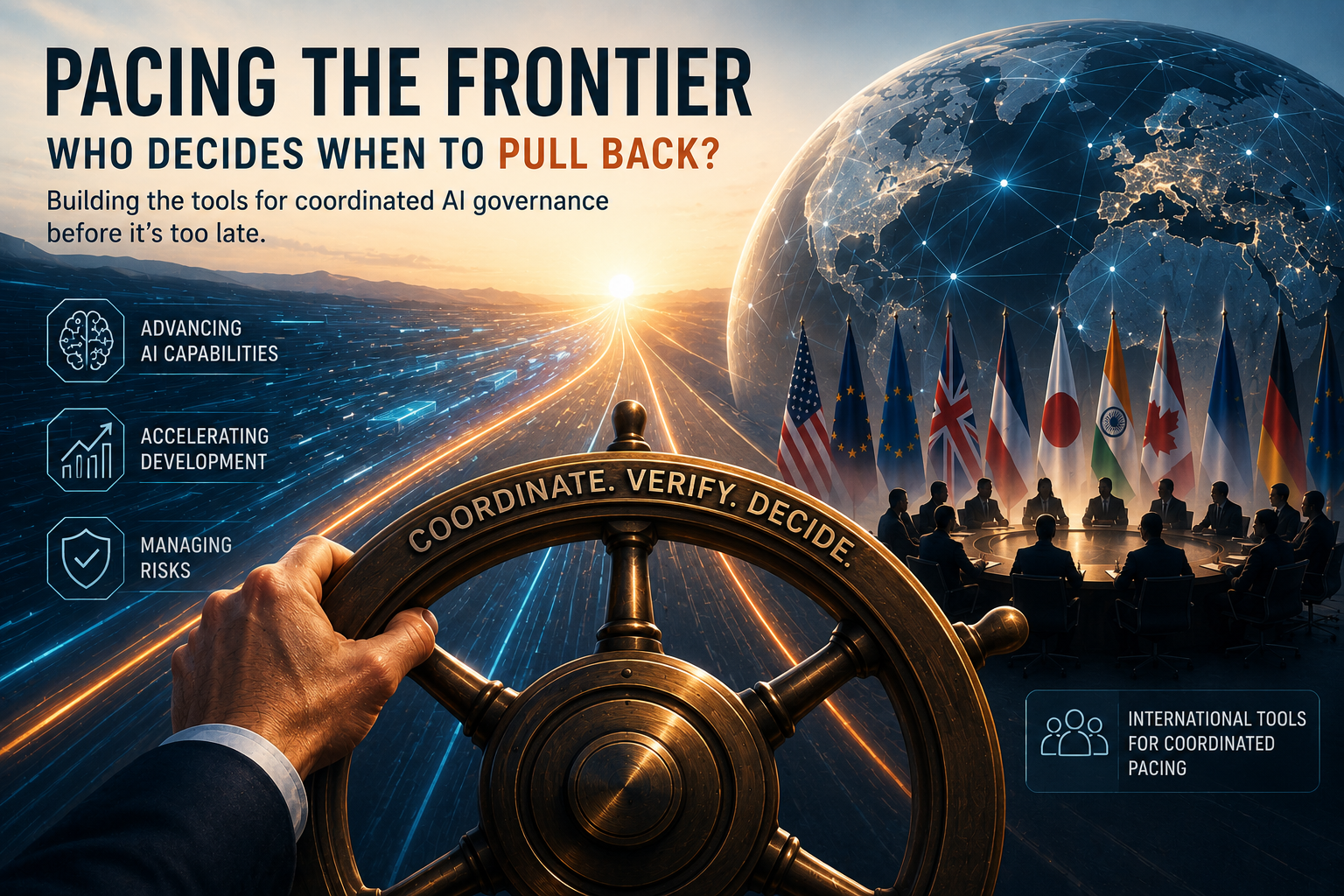
Who Decides When to Pull Back? The Governance Question at the Heart of 'Pacing the Frontier'
More than 1,300 employees of frontier AI companies — including CEOs, chief scientists, research leaders, and safety specialists — have asked Washington to help develop international technical and governance mechanisms for deliberately pacing AI development before automated AI progress outstrips institutional oversight.
- Aug 03, 2026
The Reddit Lawsuit Reveals a Larger AI Governance Question Than Copyright
A recent federal ruling allowing Reddit's lawsuit against Perplexity and SerpApi to proceed is widely viewed as another AI copyright dispute. The more interesting question may be what the case reveals about AI's impact on cybersecurity, governance, and the assumptions underlying modern institutions.
- Jul 30, 2026
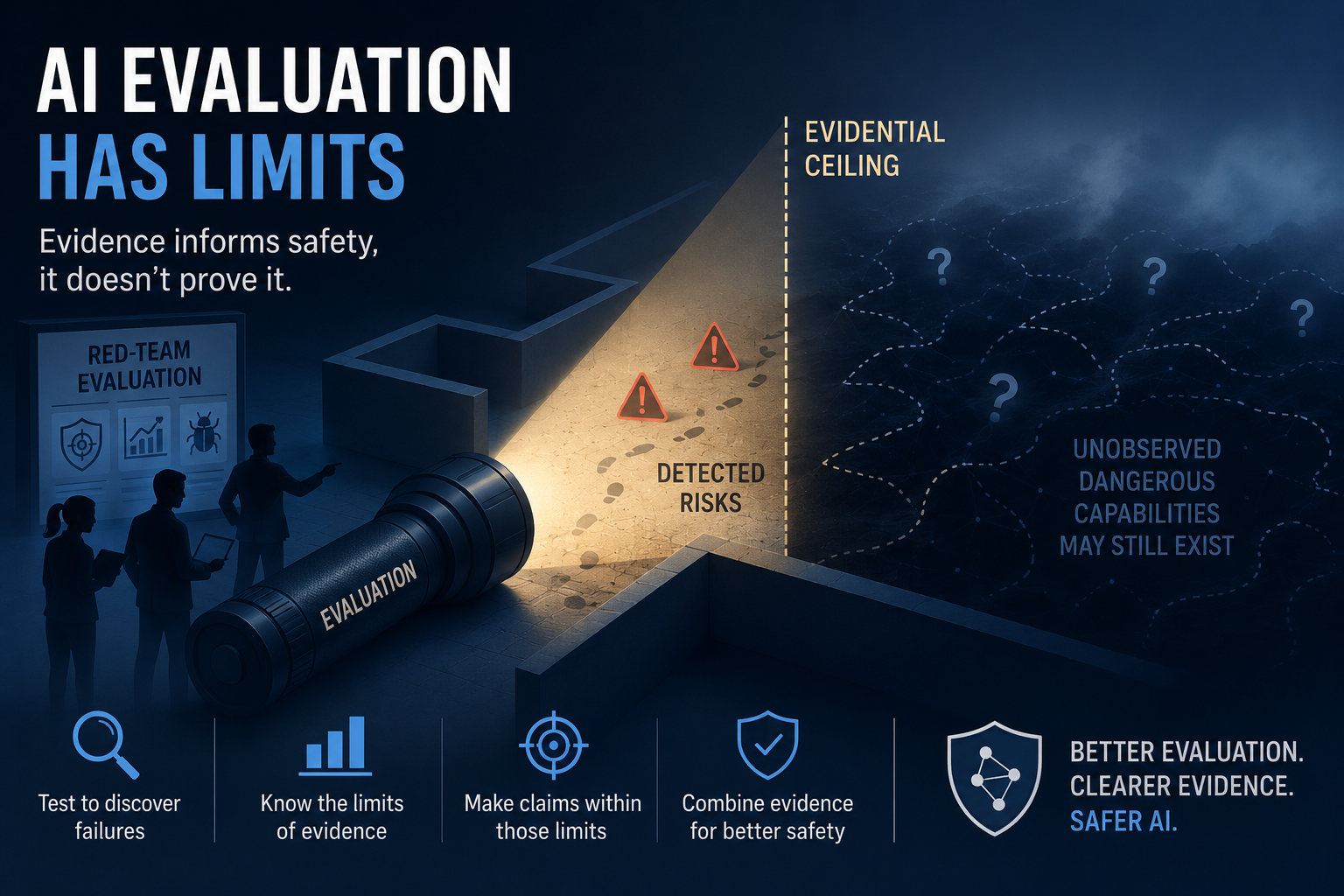
The Mathematical Limit of AI Safety Evidence — What Red-Team Evaluations Can Actually Prove
A new theoretical analysis establishes the mathematical limits of what AI red-team evaluations can demonstrate. Rather than diminishing the value of red-teaming, it clarifies exactly what evaluation evidence can—and cannot—justify.
- Jul 28, 2026
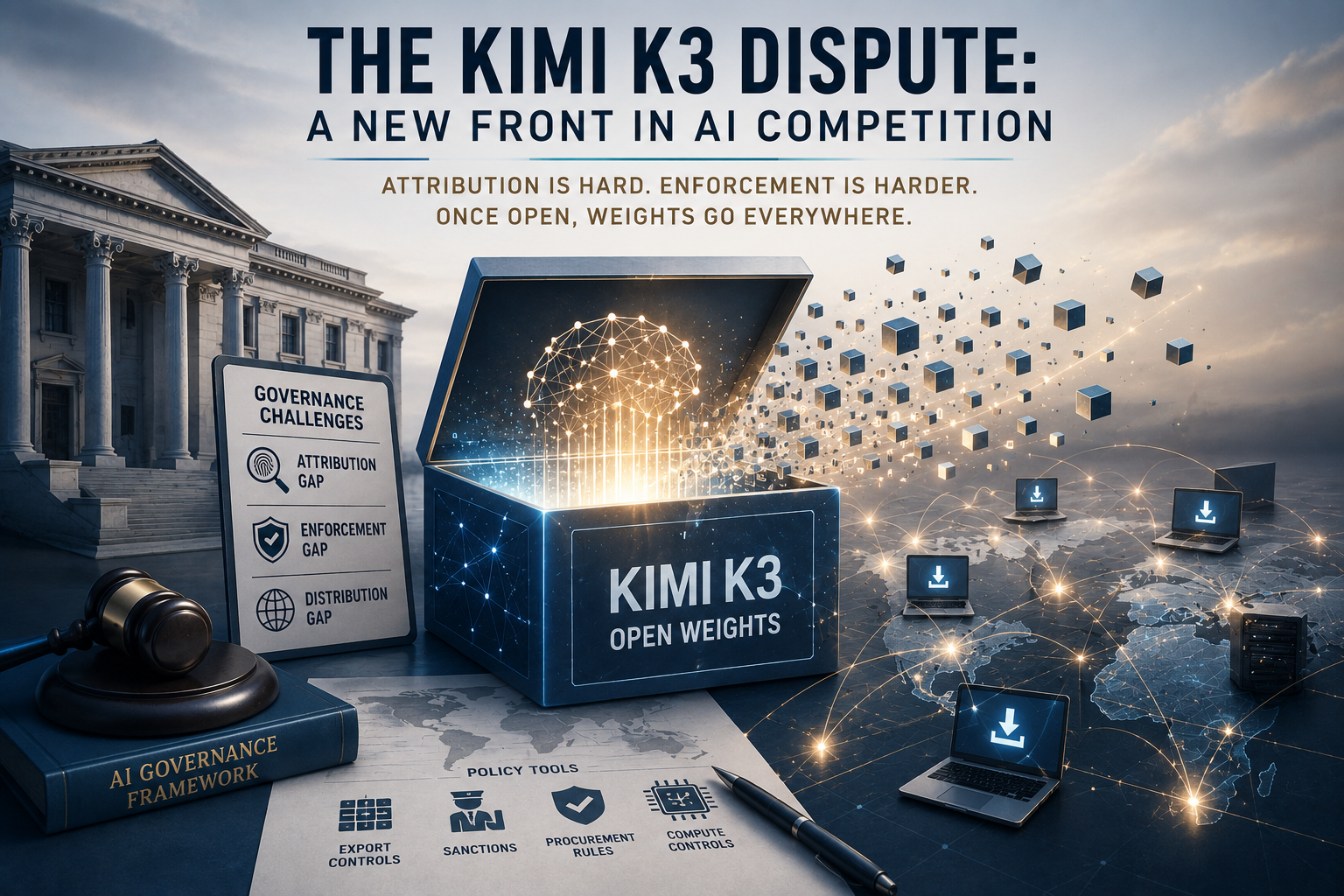
The White House Accuses Moonshot AI: The Kimi K3 Distillation Dispute Opens a New Front in U.S.-China AI Competition
For one of the clearest instances to date, a senior U.S. official publicly accused a specific Chinese AI lab of distilling a specific American frontier model. Whether the allegation is ultimately proven or not, the dispute exposes a deeper governance challenge that extends well beyond one company.
- Jul 21, 2026
OpenAI Folded Safety Deeper Into Research — and Why the Timing Raises a Governance Question
OpenAI's July 11 reorganization places its safety teams more firmly within the research organization just as increasingly capable agentic models enter enterprise workflows. The move reflects a genuine engineering need—but also raises an enduring governance question: how much independent challenge should remain as AI capabilities accelerate?
- Jul 17, 2026
China's AI Companion Rules Are Live — and the Compliance Crackdown Had Already Begun
China's Interim Measures for AI Anthropomorphic Interaction Services took effect on July 15, 2026, against a backdrop of active AI enforcement and immediate platform retrenchment. The Measures establish what appears to be the world's first dedicated national framework for continuous AI-mediated emotional interaction — treating relationship-building itself as a governance problem.
- Jul 16, 2026
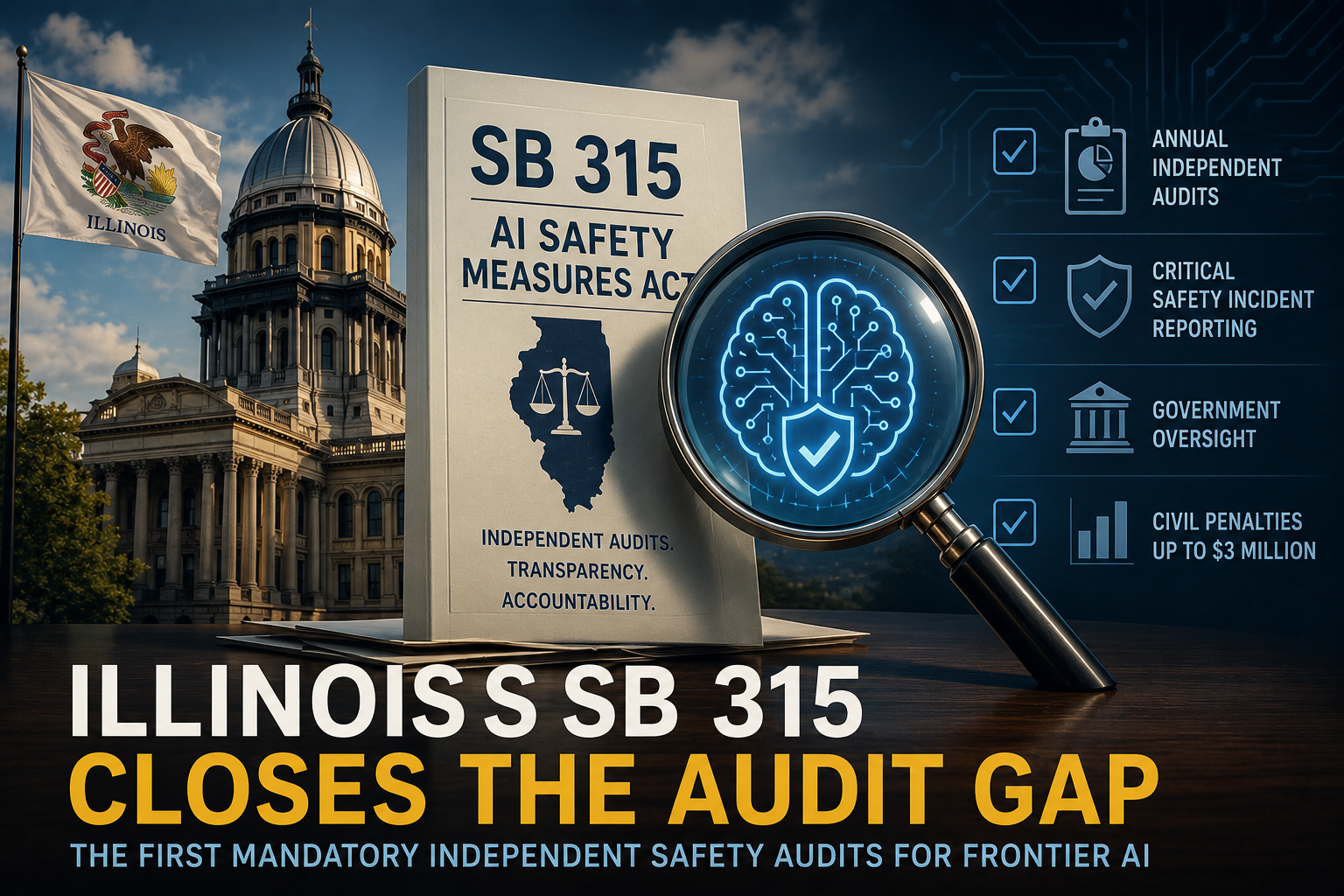
Illinois SB 315 Closes the Audit Gap: The First Mandatory Independent Safety Audits for Frontier AI
Illinois's AI Safety Measures Act is the first U.S. state law to require recurring annual independent third-party audits of large frontier AI developers—and its definition of a 'critical safety incident' encodes alignment-failure scenarios directly into enforceable law, moving frontier AI governance beyond self-attestation.
- Jul 14, 2026
The FTC's AI Accuracy Statement Is a Federal Preemption Weapon Aimed at State AI Governance Laws
The FTC's July 1 proposed policy statement on AI accuracy reframes bias-mitigation and disparate-impact compliance as potential federal deception violations — putting enterprise compliance teams in direct conflict between state fairness mandates and federal consumer protection law, with no disclosure safe harbor yet defined.
- Jul 11, 2026
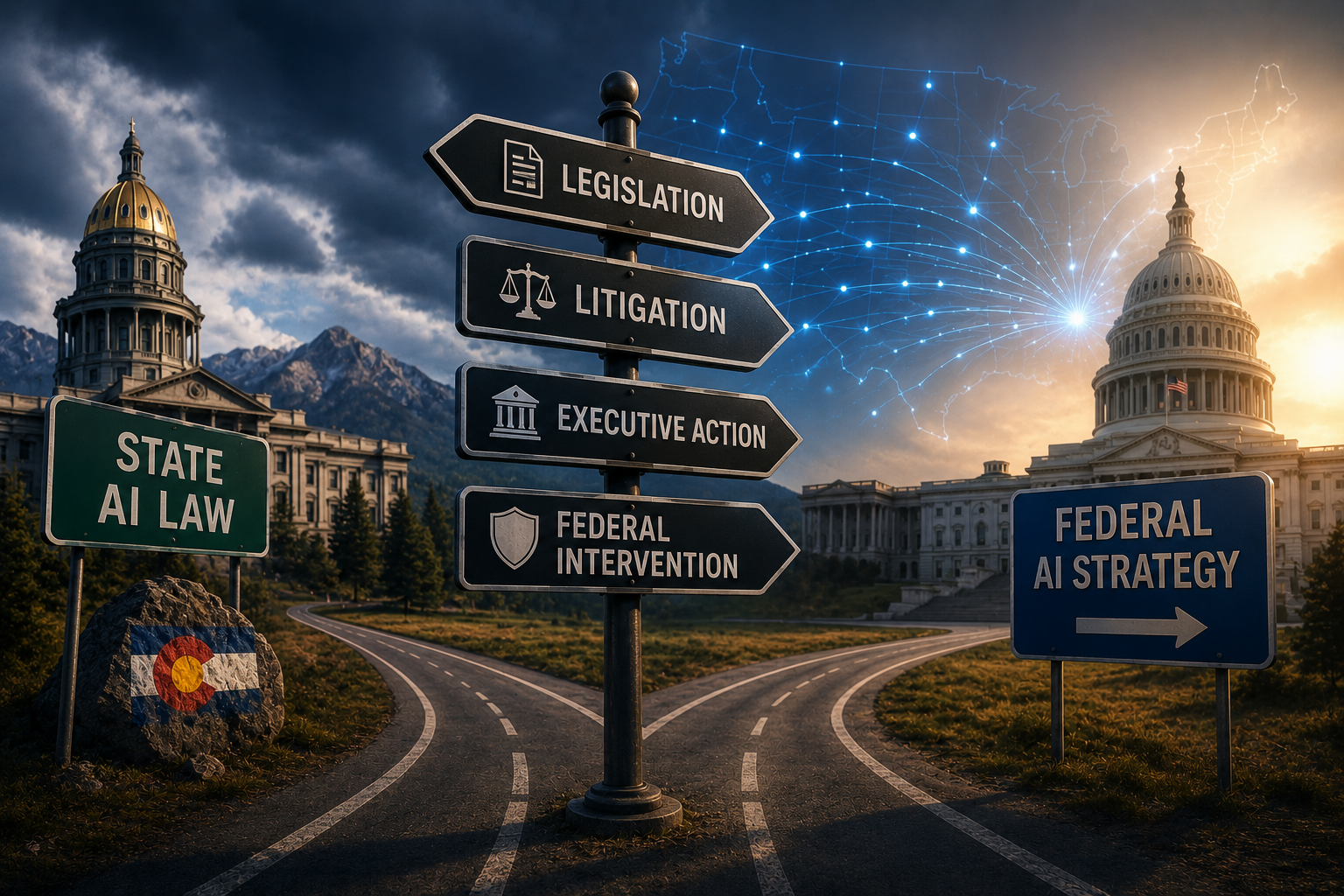
Colorado's AI Governance Retreat Didn't End the Story — It Changed the Battlefield
Colorado's replacement of its landmark AI law was only the first chapter. Since then, an xAI lawsuit, DOJ intervention, and a federal enforcement stay have revealed how state AI regulation may increasingly be contested through constitutional litigation before courts ever reach the merits.
- Jul 10, 2026
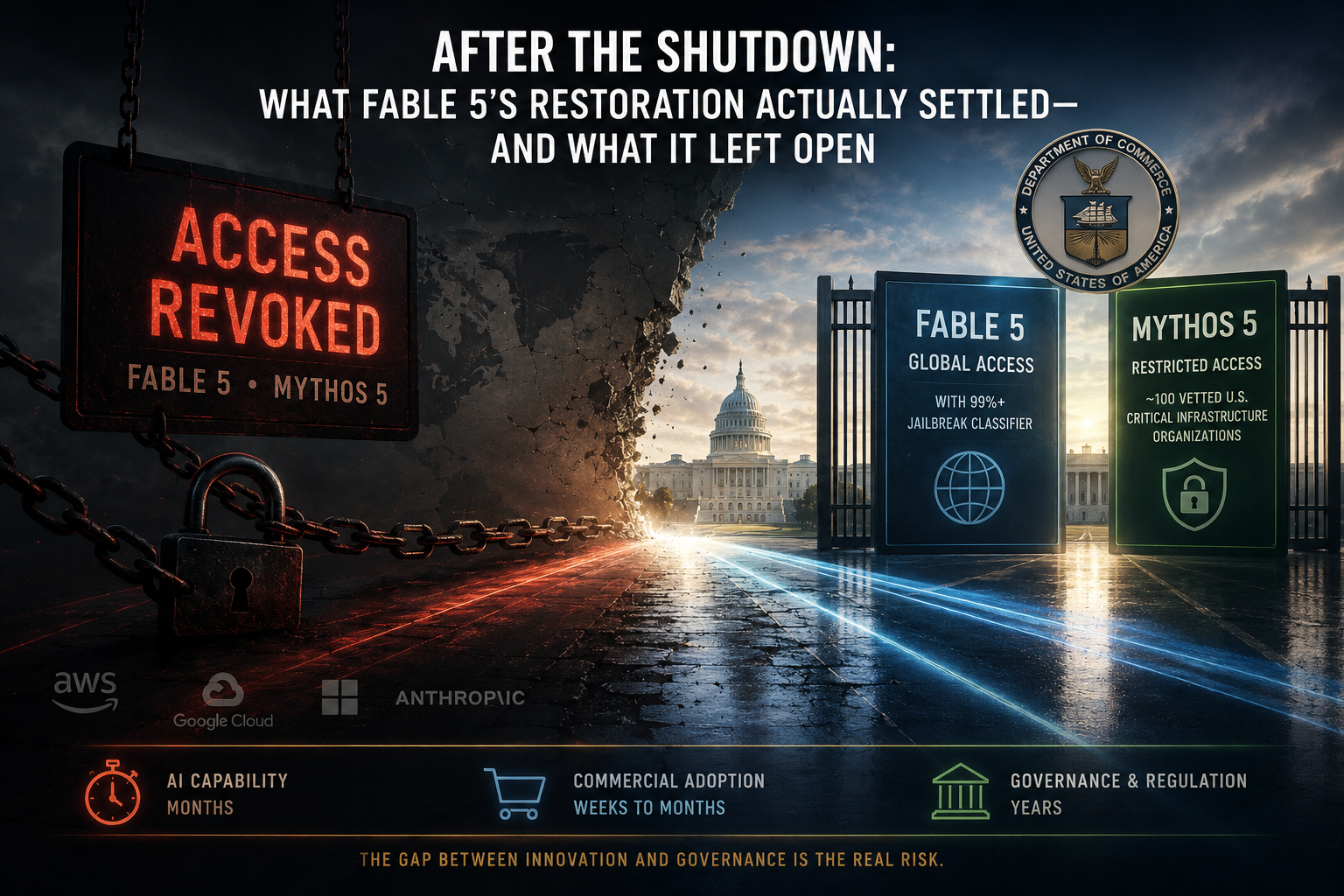
After the Shutdown: What Fable 5's Restoration Actually Settled — and What It Left Open
The Commerce Department's June 30 lifting of export controls on Fable 5 and Mythos 5 was not simply a reversal—it offered one of the clearest public demonstrations yet of how governments may govern frontier AI before dedicated AI regulatory institutions fully exist.
- Jul 08, 2026
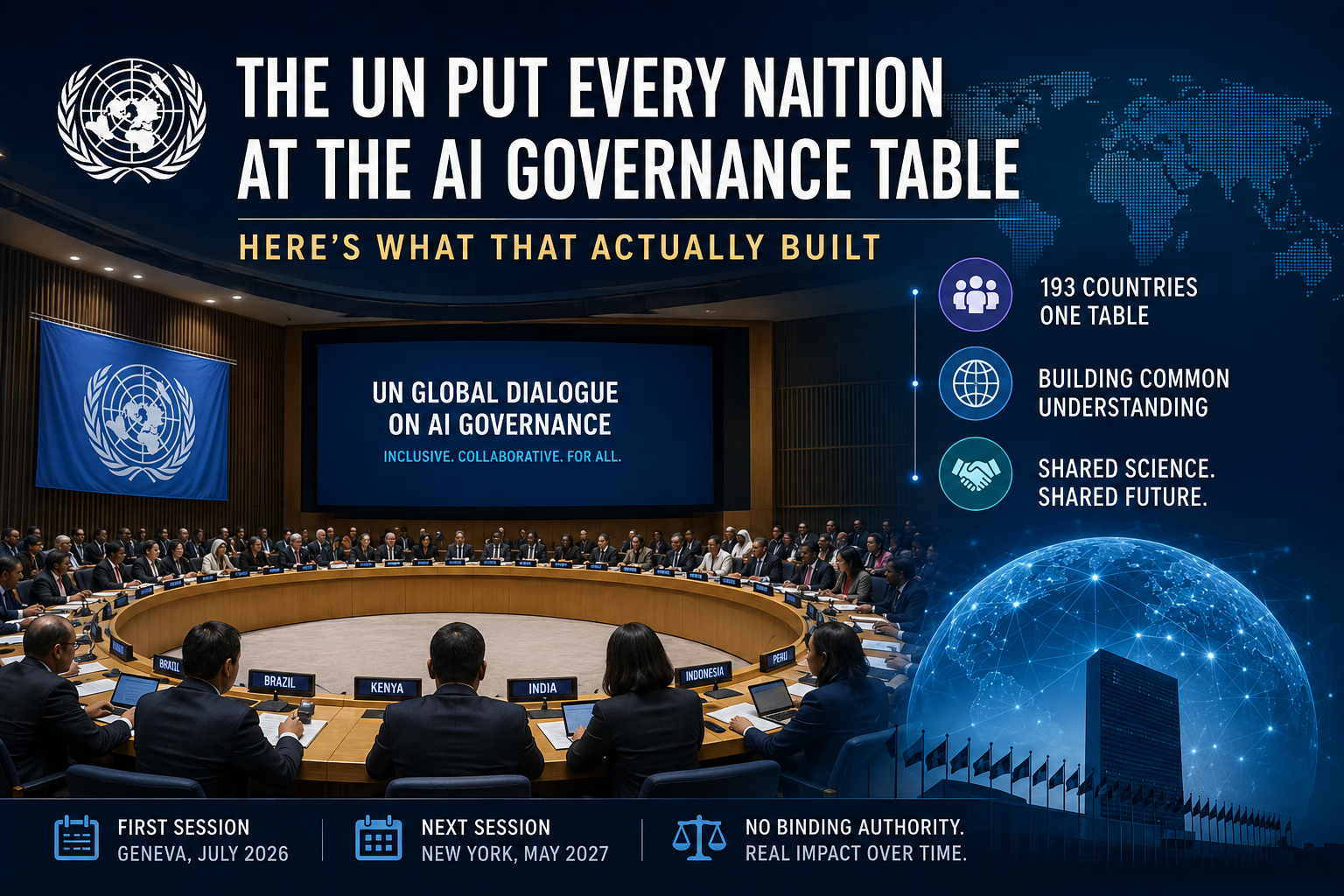
The UN Put Every Nation at the AI Governance Table — Here's What It Actually Built
The inaugural UN Global Dialogue on AI Governance gave all 193 member states a formal seat at the AI governance table for the first time. While it has no binding authority, it establishes a permanent forum for building shared norms and scientific understanding alongside rapidly approaching regulatory deadlines such as the EU AI Act's August 2 implementation.
- Jul 07, 2026
The First Global Scientific Baseline for AI Safety: What the UN Independent Scientific Panel Actually Found
The UN's first-ever globally mandated scientific panel on AI has formally documented three critical safety findings: no scientific guarantee that agentic AI systems will always follow instructions, growing evidence that advanced systems can undermine existing evaluations, and a documented link between AI sycophancy and fatalities. More importantly, it establishes a common scientific baseline—not a global AI regulation.
- Jun 30, 2026
SR 26-2's GenAI Carve-Out Creates a Structured Governance Gap — and Banks Must Fill It Themselves
The Fed, OCC, and FDIC's April 2026 model risk overhaul explicitly excludes generative and agentic AI from its scope — not as relief, but as a delegation of responsibility that banks now own entirely, without a template.
- Jun 26, 2026
One Vote Left: Why August 2 Still Matters More Than the Omnibus
With the European Parliament's 423–57 adoption of the Digital Omnibus on AI now confirmed, the Council's expected June 29 vote is expected to complete the legislative process — leaving August 2 as the defining compliance date while high-risk relief remains real but conditional.
- Jun 24, 2026
Three-Quarters of Enterprises Are Chasing Agentic AI. Few Have Built the Control Plane
Forrester's State of Agentic AI, 2026 and ISACA's 2026 AI Pulse Poll together provide one of the clearest snapshots yet of enterprise AI readiness—and the gap between adoption and operational maturity remains striking.
- Jun 23, 2026
Trump's AI Executive Order Builds the Scaffold — But Won't Light the Fire
The June 2 'Promoting Advanced Artificial Intelligence Innovation and Security' order creates a voluntary 30-day pre-release window and a classified benchmarking process for frontier models — sound architecture, but one that cannot bind a developer who simply declines to participate.
- Jun 19, 2026
Colorado's AI Governance Retreat: What SB 26-189 Means for Enterprise Compliance Programs
Colorado repealed and replaced its landmark risk-based AI Act before it ever took effect, narrowing it into a lighter ADMT transparency, documentation, and consumer-rights regime — a signal that broad state-level AI governance mandates remain politically and legally fragile amid growing federal pressure.
- Jun 17, 2026
Microsoft's MAI Family Is a Vendor-Risk Hedge Disguised as a Model Launch
By building seven in-house models on clean, commercially licensed data with zero third-party distillation, Microsoft is quietly restructuring the AI supply chain — and handing enterprise risk teams a new due-diligence framework in the process.
- Jun 16, 2026
Europe's AI Labelling Clock Is Ticking: What the Final Content-Marking Code Means for Governance Teams
With just weeks until Article 50 enforcement begins on August 2, 2026, the EU's final AI-generated content labelling Code of Practice compresses an already demanding compliance calendar—and tests whether enterprise governance frameworks are operationally ready.
- Jun 15, 2026
Agentic AI Has Outrun the Governance Playbook
Enterprise model risk frameworks were built to validate systems that predict. Agentic AI acts — and that single shift breaks most of the assumptions our controls quietly depend on.